ARCO
Overview
ARCO is a minimalist camera concept reimagined for modern creators who value intent over excess.
The project explores how a camera can feel quieter, more focused, and more personal in a world overloaded with features and screens.
Instead of chasing specifications, ARCO was designed around the act of making. Framing, holding, adjusting, and capturing. The goal was to strip the camera back to its essentials while keeping it emotionally engaging and physically satisfying to use.
This project is a study in form restraint, ergonomic clarity, and thoughtful interaction design, executed as a complete industrial design exploration from concept to detailed renders.
Categories
Consumer Electronics
Mirrorless Camera
Methods used
Product Research • Competitive Benchmarking • Ergonomic Analysis • Form Exploration • CAD Modeling • Prototype Development
Date
Problem Statement
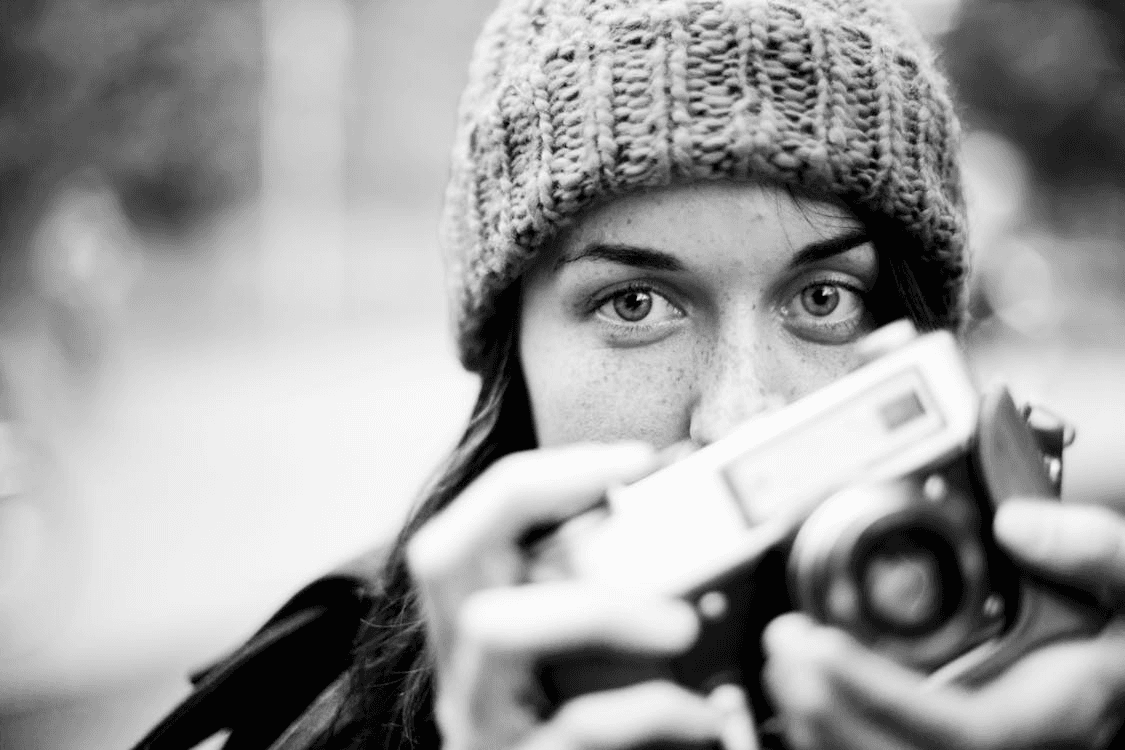
Modern cameras are powerful but overwhelming.
Buttons, dials, screens, and menus compete for attention, often interrupting the creative flow rather than supporting it.
Through observation and personal use, a few clear problems stood out:
Cameras prioritize features over experience
Visual and physical clutter distracts from composition
Many products feel designed for specs, not hands
The challenge was to redesign a camera that removes unnecessary complexity while still feeling capable, premium, and intentional.
Solution at a Glance

ARCO is a minimalist camera designed around touch, balance, and focus.
It reduces visible controls to only what is essential, uses form to communicate function, and relies on physical interaction rather than layered menus. The design emphasizes calm surfaces, strong geometry, and intuitive grip points, allowing the creator to stay present in the moment of capture.
The result is a camera that feels less like a device and more like a tool.
How It Started
The project began with a simple question:
What does a camera need to be, and what can it stop being?
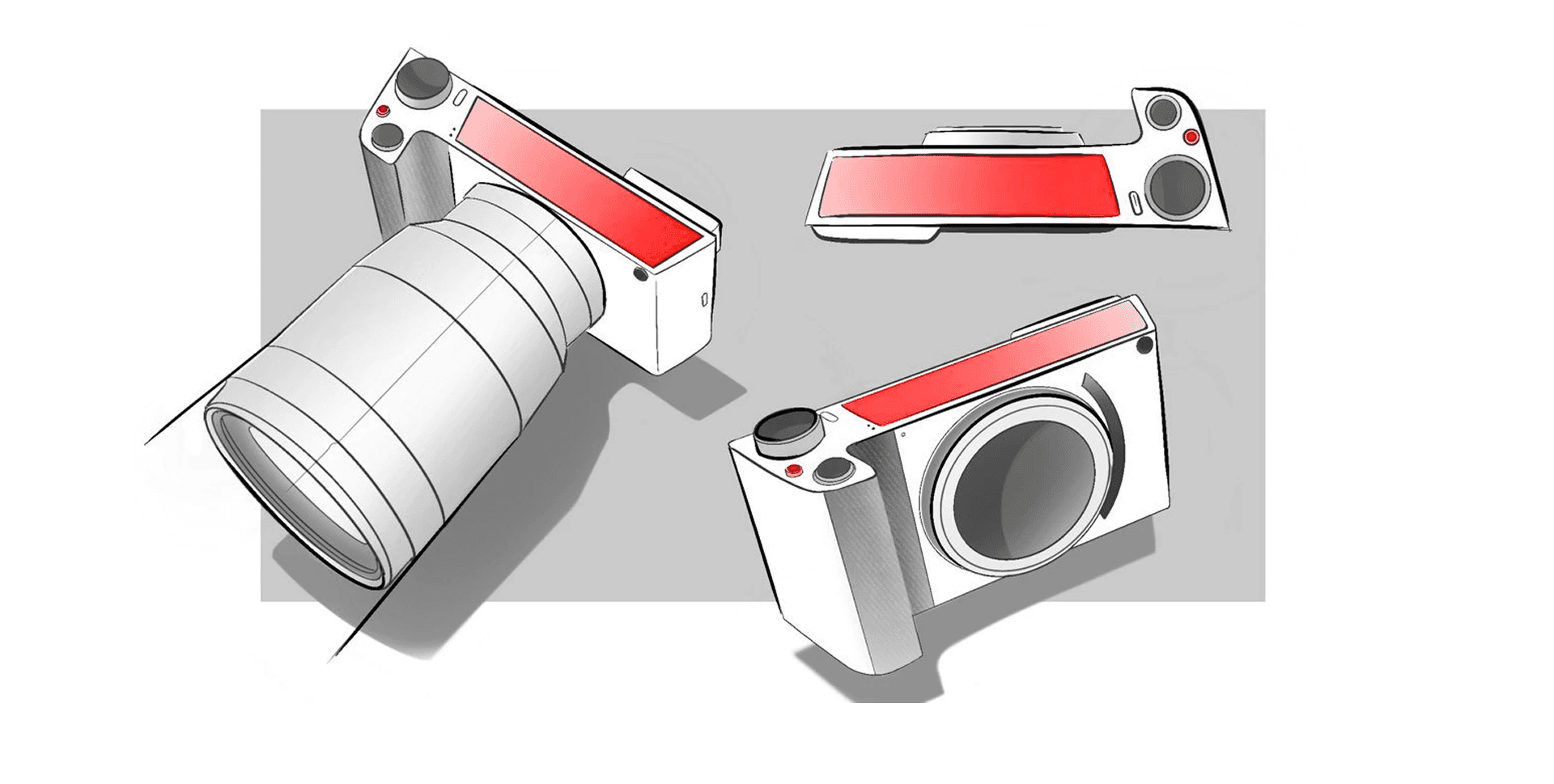
I started by studying classic film cameras, modern mirrorless systems, and everyday objects with strong tactile identities. I sketched extensively, not to add features, but to remove them. Early sketches focused on silhouette, hand feel, and visual weight rather than internal components.
ARCO emerged from repeated attempts to simplify the camera into a single, confident form that could communicate purpose without explanation.
User Research
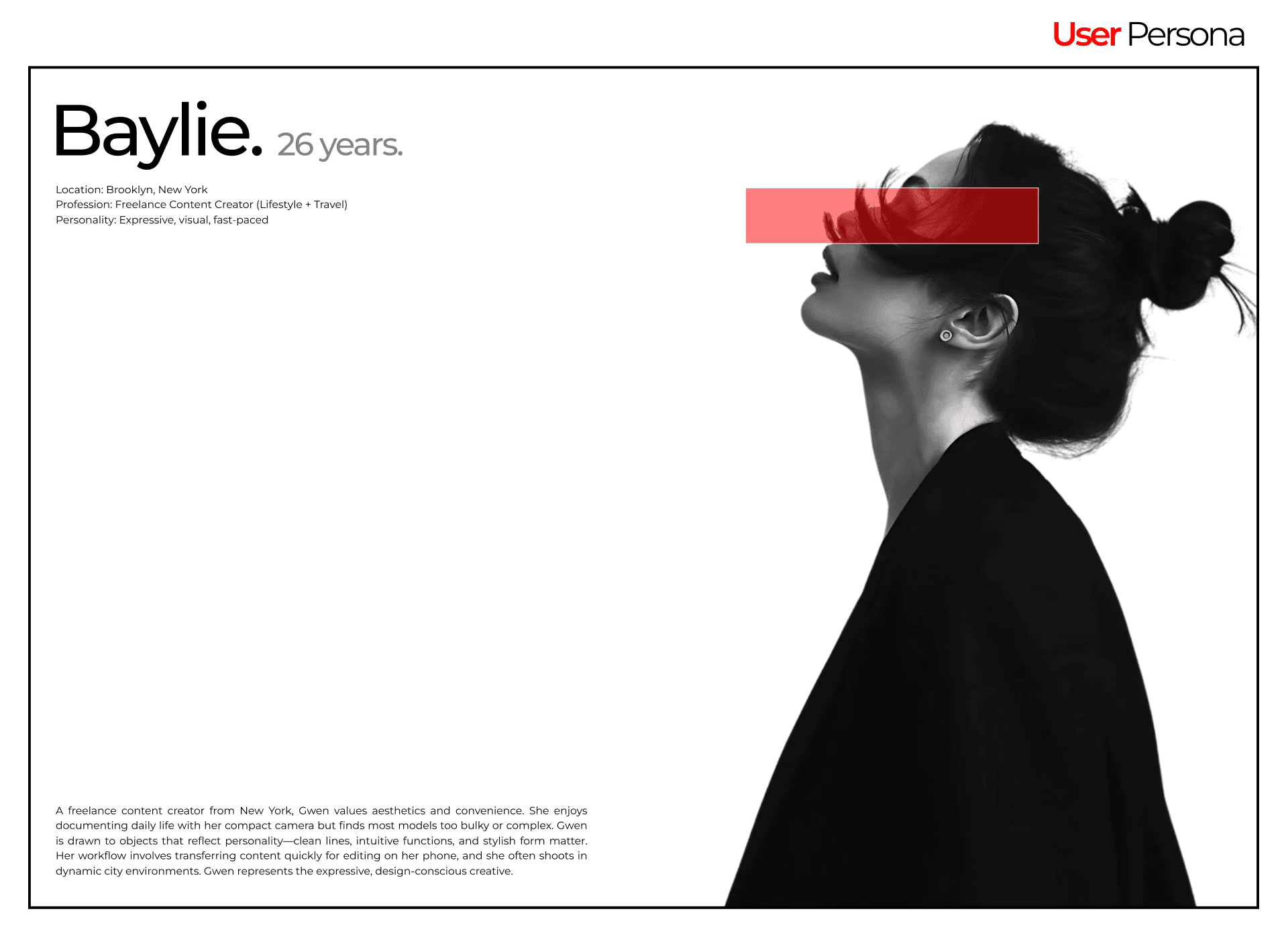
Research was conducted through informal interviews and observational studies with:
Hobbyist photographers
Content creators
Design students who regularly use cameras
Instead of asking about specifications, conversations focused on emotions and habits:
When does the camera feel distracting?
What controls are actually used daily?
What moments feel frictionless?
A recurring insight was that creators value rhythm and familiarity more than options. Many admitted to using only a fraction of available controls, yet feeling burdened by their presence.
Approach
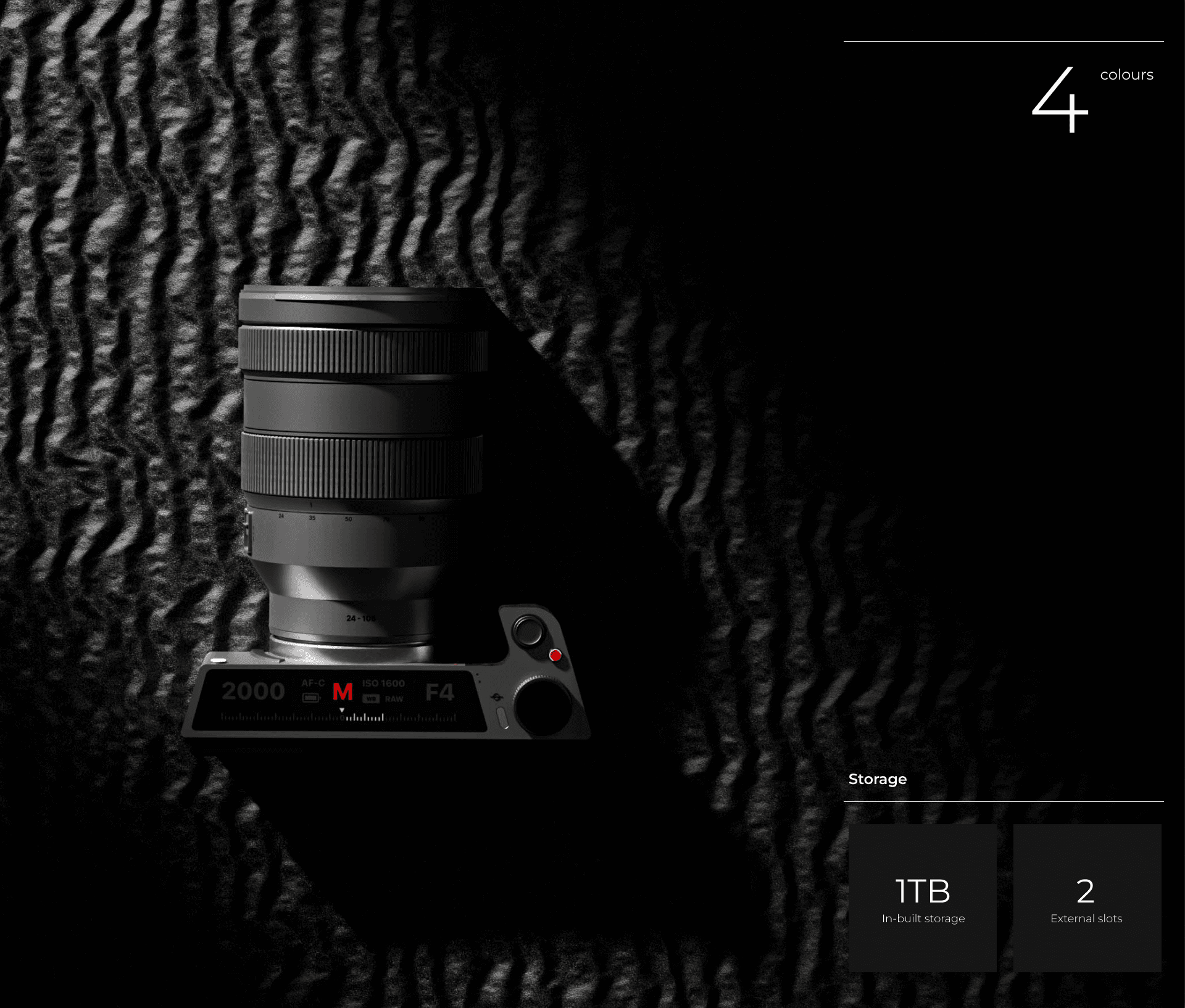
The design approach was subtractive.
Every design decision had to justify its existence physically, visually, and ergonomically. I treated the camera as an object first and a device second.
The process followed a clear loop:
Sketch → Evaluate hand feel → Simplify → Refine proportions → Repeat
Rather than designing around components, I designed around the grip, the lens relationship, and the way the camera rests when idle. CAD was used not just to model, but to test balance, edge softness, and surface continuity.
Solution
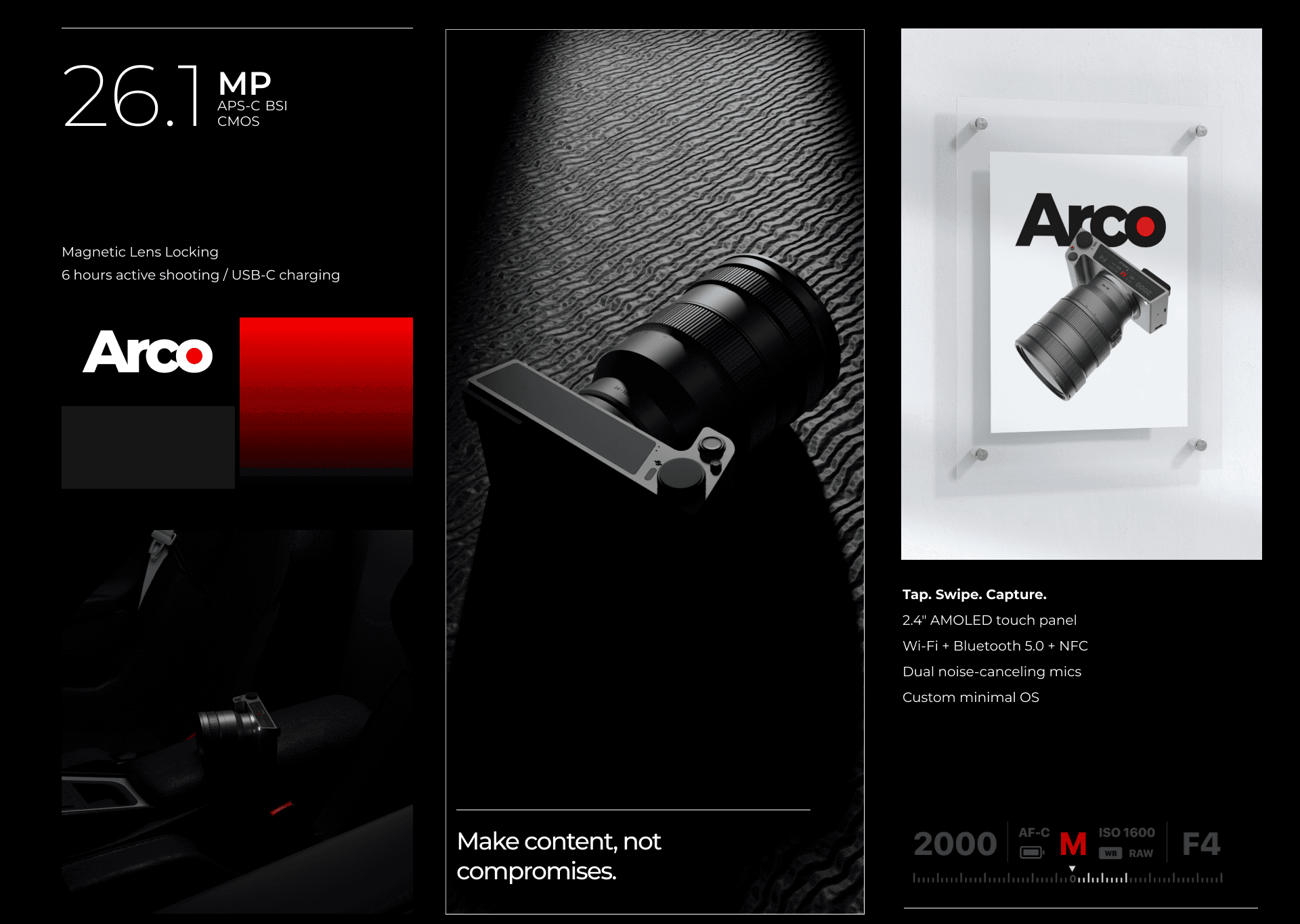
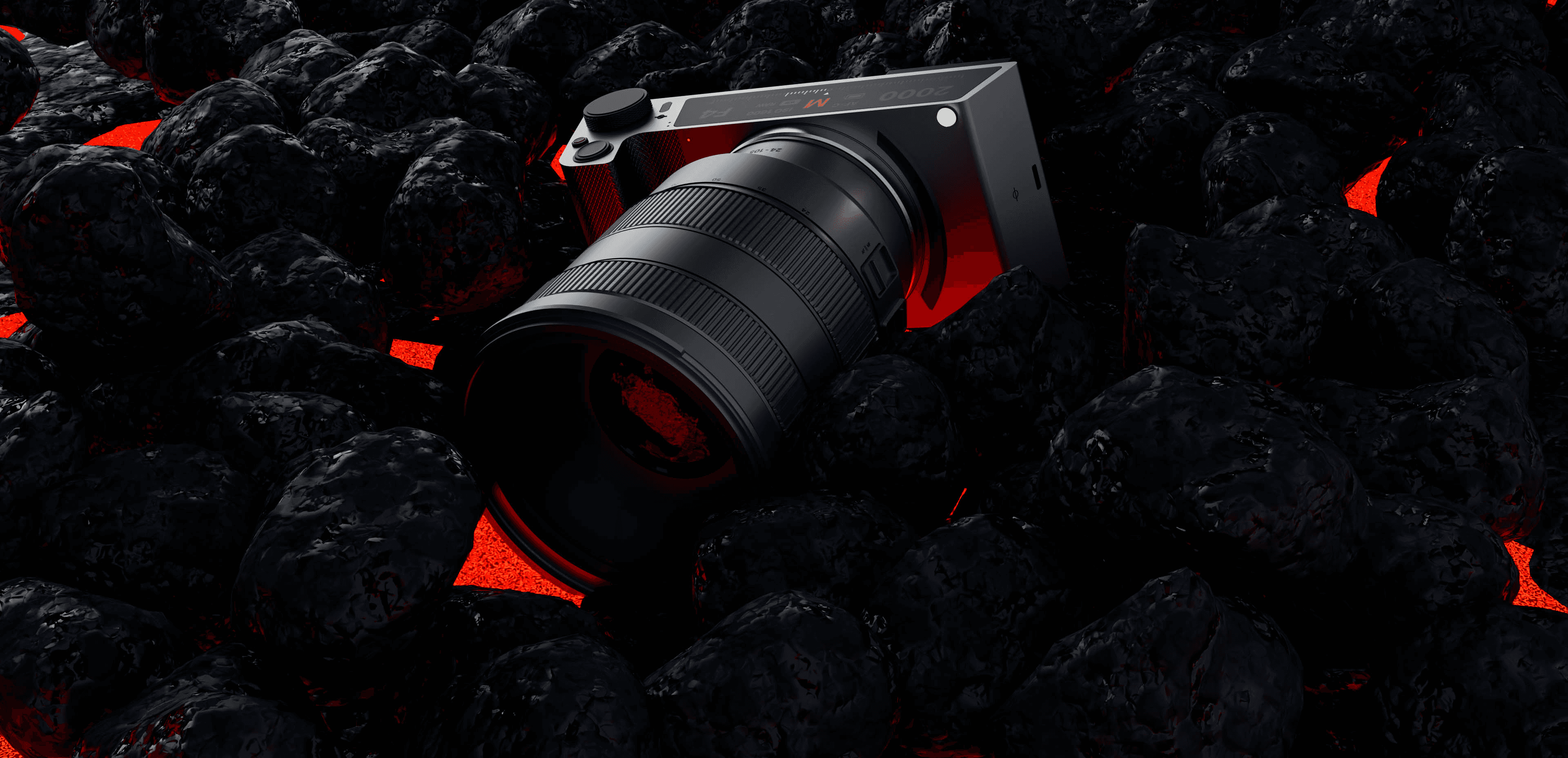
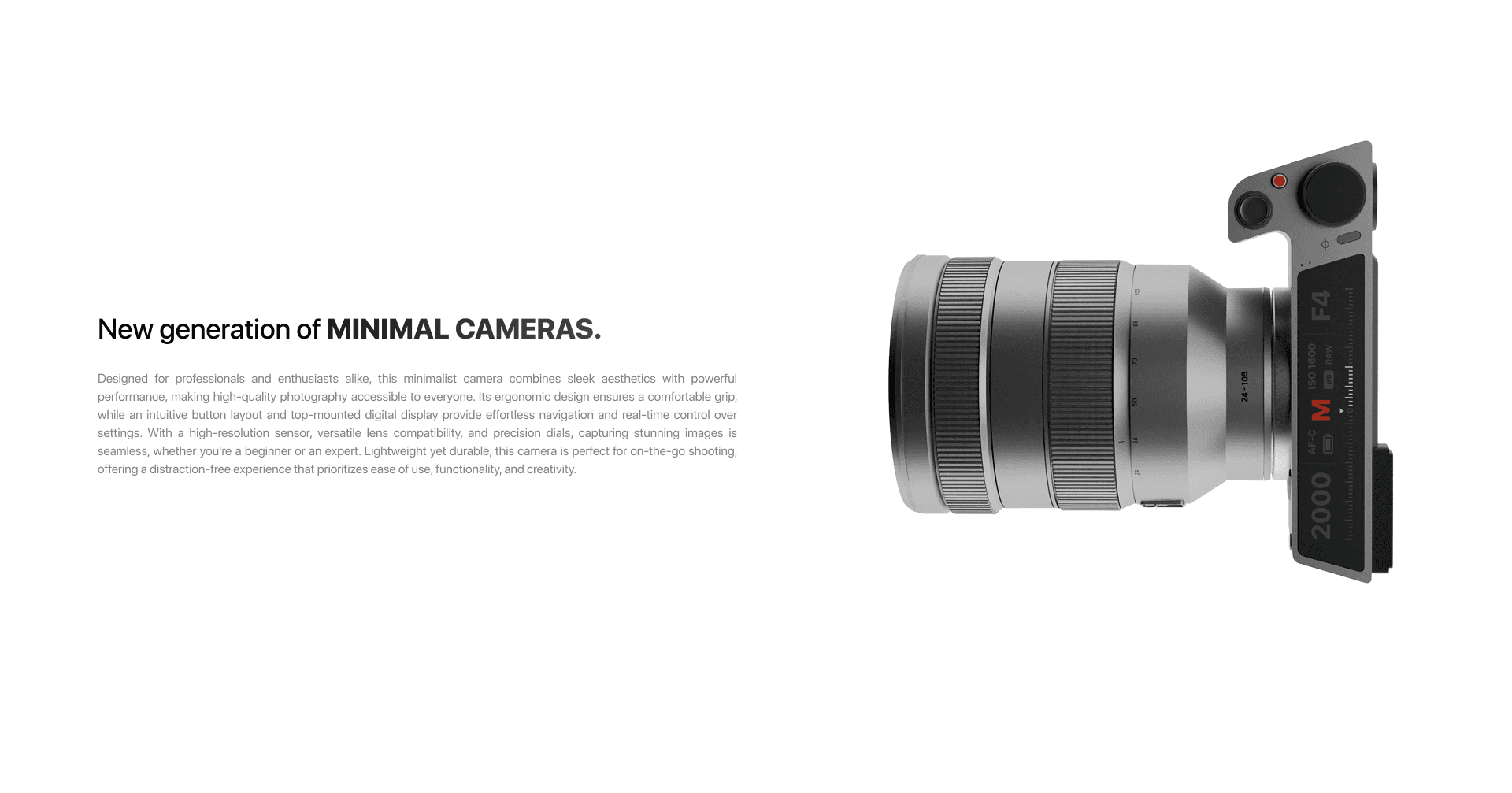
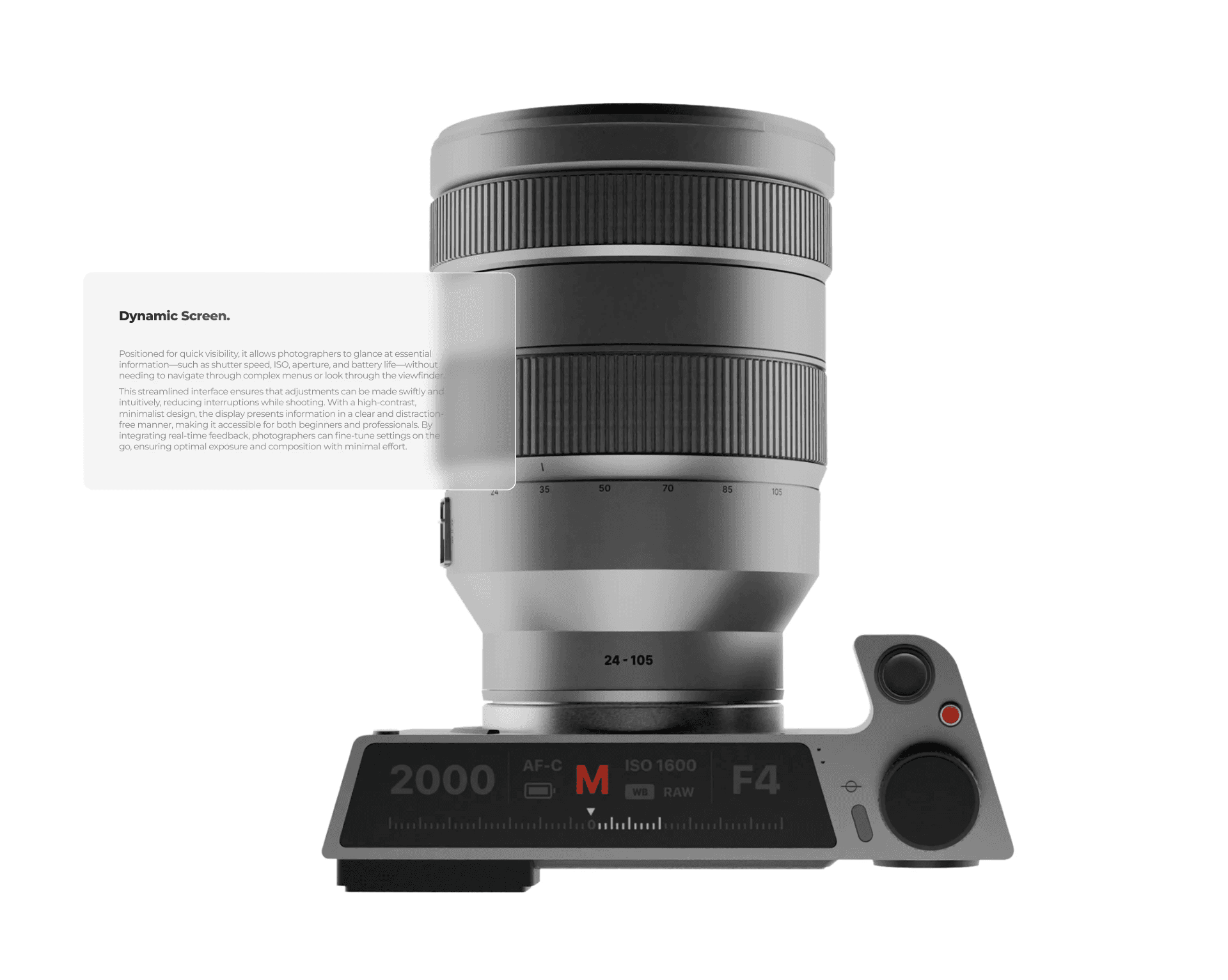
The final design features a compact, monolithic body with softened edges and a clear visual hierarchy.
The camera has:
A strong central mass for stability
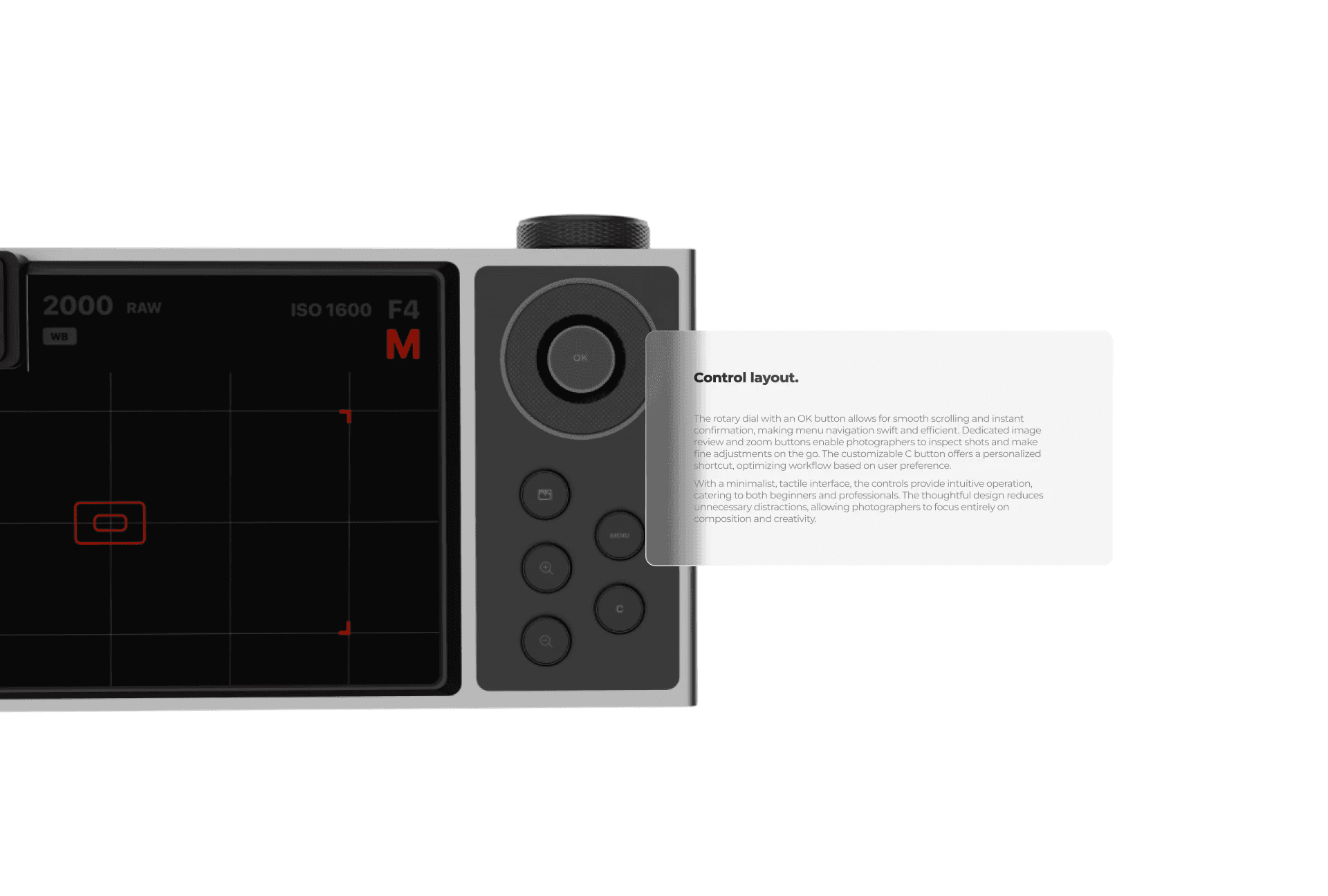
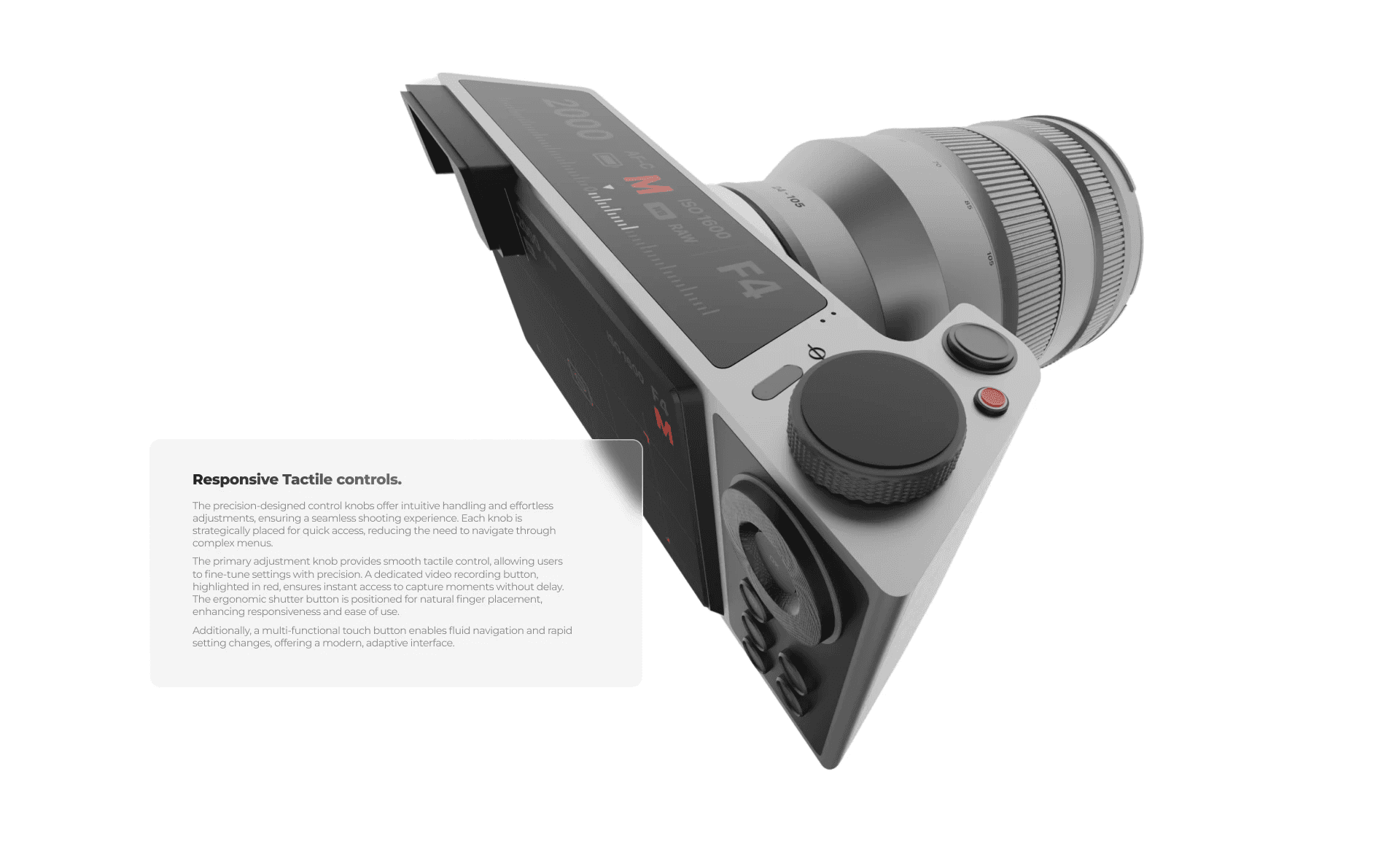
Minimal visible controls with clear tactile differentiation
A form that naturally guides finger placement
A calm front face that prioritizes the lens as the focal point
ARCO avoids visual noise. Surfaces are uninterrupted, transitions are intentional, and the design communicates confidence through restraint.
Design Decisions
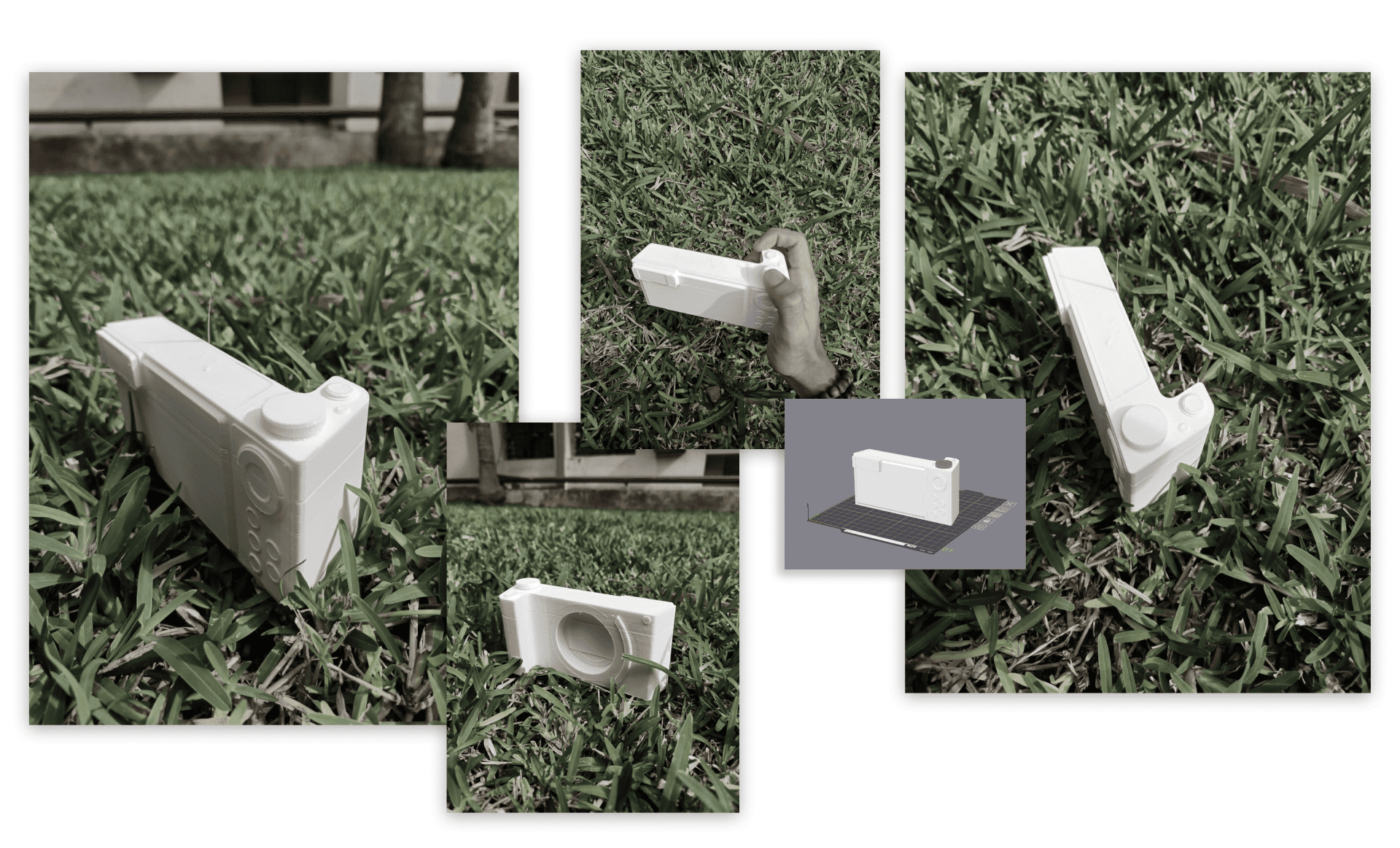
Several key decisions shaped the final outcome:
Minimal controls
Only essential physical inputs are exposed. This reduces visual clutter and encourages muscle memory.
Form-led ergonomics
Instead of rubber grips or aggressive textures, the form itself provides comfort and control.
Material honesty
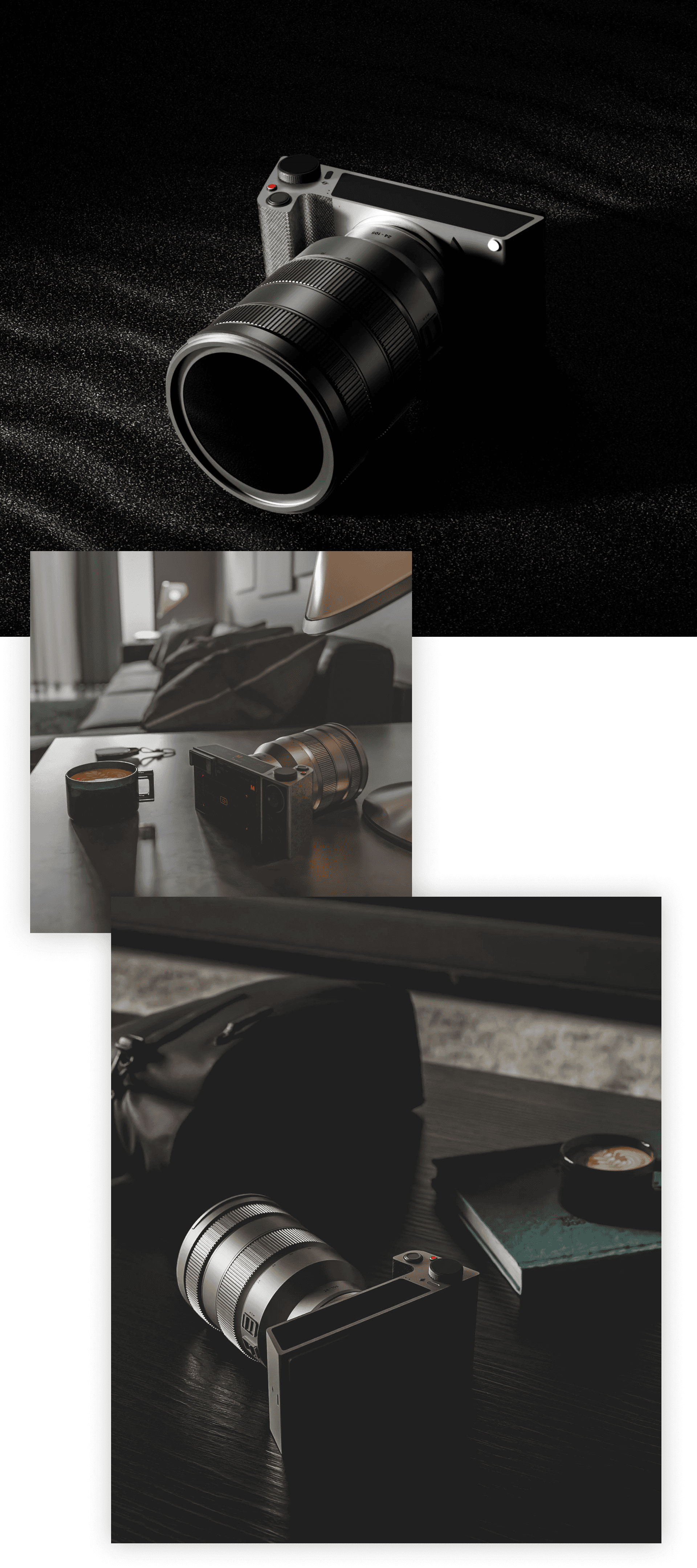
The design assumes premium materials with subtle finishes, allowing light and shadow to define the object rather than surface graphics.
Balanced proportions
The camera is designed to feel stable in hand and visually grounded when placed on a surface.
Each decision was evaluated not by aesthetics alone, but by how it would feel during repeated use.
1.Minimal
Only essential physical inputs are exposed.
2.Ergonomics
The form itself provides comfort and control.
3.Balance
Designed to feel stable in hand and visually grounded.
Key Insights
Creators prefer confidence over customization
Too many options create hesitation, not freedom
Physical clarity leads to creative clarity
A strong form can replace instructions
These insights reinforced the idea that good industrial design often lies in what is removed, not what is added.
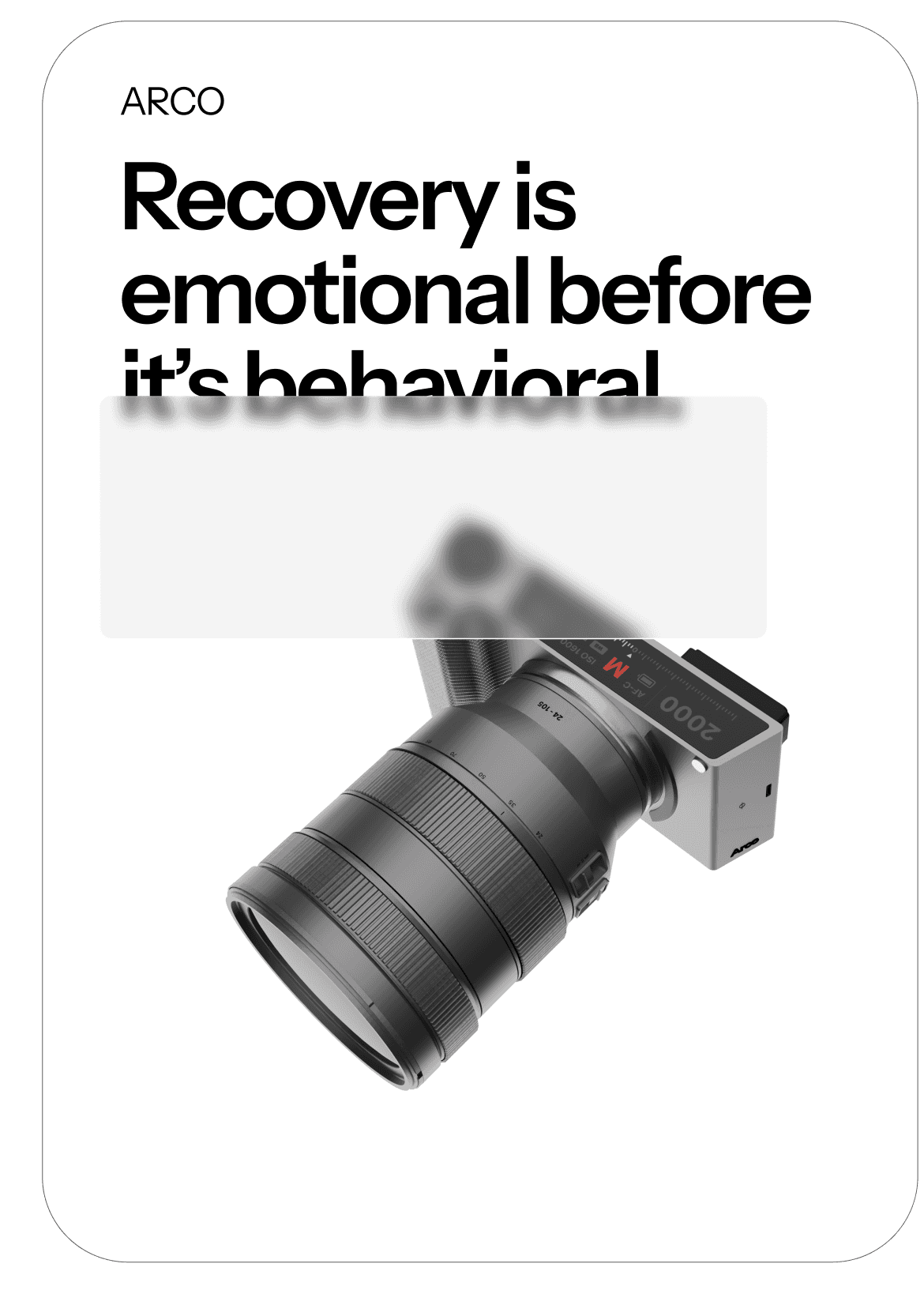

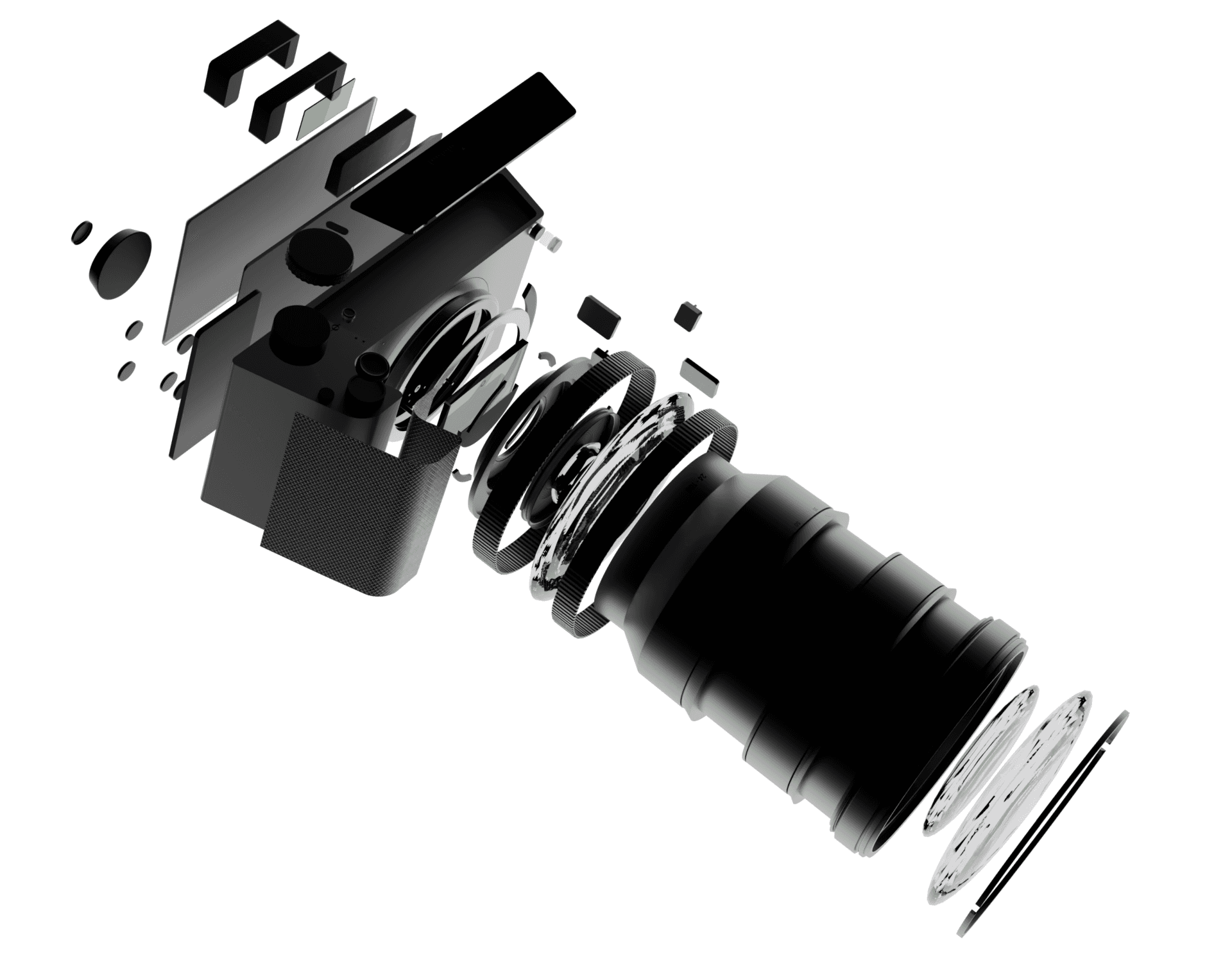
CAD
Renders
ARCO
Overview
ARCO is a minimalist camera concept reimagined for modern creators who value intent over excess.
The project explores how a camera can feel quieter, more focused, and more personal in a world overloaded with features and screens.
Instead of chasing specifications, ARCO was designed around the act of making. Framing, holding, adjusting, and capturing. The goal was to strip the camera back to its essentials while keeping it emotionally engaging and physically satisfying to use.
This project is a study in form restraint, ergonomic clarity, and thoughtful interaction design, executed as a complete industrial design exploration from concept to detailed renders.
Categories
Consumer Electronics
Mirrorless Camera
Methods used
Product Research • Competitive Benchmarking • Ergonomic Analysis • Form Exploration • CAD Modeling • Prototype Development
Date
Problem Statement
Modern cameras are powerful but overwhelming.
Buttons, dials, screens, and menus compete for attention, often interrupting the creative flow rather than supporting it.
Through observation and personal use, a few clear problems stood out:
Cameras prioritize features over experience
Visual and physical clutter distracts from composition
Many products feel designed for specs, not hands
The challenge was to redesign a camera that removes unnecessary complexity while still feeling capable, premium, and intentional.
Solution at a Glance
ARCO is a minimalist camera designed around touch, balance, and focus.
It reduces visible controls to only what is essential, uses form to communicate function, and relies on physical interaction rather than layered menus. The design emphasizes calm surfaces, strong geometry, and intuitive grip points, allowing the creator to stay present in the moment of capture.
The result is a camera that feels less like a device and more like a tool.
How It Started
The project began with a simple question:
What does a camera need to be, and what can it stop being?
I started by studying classic film cameras, modern mirrorless systems, and everyday objects with strong tactile identities. I sketched extensively, not to add features, but to remove them. Early sketches focused on silhouette, hand feel, and visual weight rather than internal components.
ARCO emerged from repeated attempts to simplify the camera into a single, confident form that could communicate purpose without explanation.
User Research
Research was conducted through informal interviews and observational studies with:
Hobbyist photographers
Content creators
Design students who regularly use cameras
Instead of asking about specifications, conversations focused on emotions and habits:
When does the camera feel distracting?
What controls are actually used daily?
What moments feel frictionless?
A recurring insight was that creators value rhythm and familiarity more than options. Many admitted to using only a fraction of available controls, yet feeling burdened by their presence.
Approach
The design approach was subtractive.
Every design decision had to justify its existence physically, visually, and ergonomically. I treated the camera as an object first and a device second.
The process followed a clear loop:
Sketch → Evaluate hand feel → Simplify → Refine proportions → Repeat
Rather than designing around components, I designed around the grip, the lens relationship, and the way the camera rests when idle. CAD was used not just to model, but to test balance, edge softness, and surface continuity.
Solution
The final design features a compact, monolithic body with softened edges and a clear visual hierarchy.
The camera has:
A strong central mass for stability
Minimal visible controls with clear tactile differentiation
A form that naturally guides finger placement
A calm front face that prioritizes the lens as the focal point
ARCO avoids visual noise. Surfaces are uninterrupted, transitions are intentional, and the design communicates confidence through restraint.
Design Decisions
Several key decisions shaped the final outcome:
Minimal controls
Only essential physical inputs are exposed. This reduces visual clutter and encourages muscle memory.
Form-led ergonomics
Instead of rubber grips or aggressive textures, the form itself provides comfort and control.
Material honesty
The design assumes premium materials with subtle finishes, allowing light and shadow to define the object rather than surface graphics.
Balanced proportions
The camera is designed to feel stable in hand and visually grounded when placed on a surface.
Each decision was evaluated not by aesthetics alone, but by how it would feel during repeated use.
1.Minimal
Only essential physical inputs are exposed.
2.Ergonomics
The form itself provides comfort and control.
3.Balance
Designed to feel stable in hand and visually grounded.
Key Insights
Creators prefer confidence over customization
Too many options create hesitation, not freedom
Physical clarity leads to creative clarity
A strong form can replace instructions
These insights reinforced the idea that good industrial design often lies in what is removed, not what is added.
CAD
Renders
ARCO
Overview
ARCO is a minimalist camera concept reimagined for modern creators who value intent over excess.
The project explores how a camera can feel quieter, more focused, and more personal in a world overloaded with features and screens.
Instead of chasing specifications, ARCO was designed around the act of making. Framing, holding, adjusting, and capturing. The goal was to strip the camera back to its essentials while keeping it emotionally engaging and physically satisfying to use.
This project is a study in form restraint, ergonomic clarity, and thoughtful interaction design, executed as a complete industrial design exploration from concept to detailed renders.
Categories
Consumer Electronics
Mirrorless Camera
Methods used
Product Research • Competitive Benchmarking • Ergonomic Analysis • Form Exploration • CAD Modeling • Prototype Development
Date
Problem Statement
Modern cameras are powerful but overwhelming.
Buttons, dials, screens, and menus compete for attention, often interrupting the creative flow rather than supporting it.
Through observation and personal use, a few clear problems stood out:
Cameras prioritize features over experience
Visual and physical clutter distracts from composition
Many products feel designed for specs, not hands
The challenge was to redesign a camera that removes unnecessary complexity while still feeling capable, premium, and intentional.
Solution at a Glance
ARCO is a minimalist camera designed around touch, balance, and focus.
It reduces visible controls to only what is essential, uses form to communicate function, and relies on physical interaction rather than layered menus. The design emphasizes calm surfaces, strong geometry, and intuitive grip points, allowing the creator to stay present in the moment of capture.
The result is a camera that feels less like a device and more like a tool.
How It Started
The project began with a simple question:
What does a camera need to be, and what can it stop being?
I started by studying classic film cameras, modern mirrorless systems, and everyday objects with strong tactile identities. I sketched extensively, not to add features, but to remove them. Early sketches focused on silhouette, hand feel, and visual weight rather than internal components.
ARCO emerged from repeated attempts to simplify the camera into a single, confident form that could communicate purpose without explanation.
User Research
Research was conducted through informal interviews and observational studies with:
Hobbyist photographers
Content creators
Design students who regularly use cameras
Instead of asking about specifications, conversations focused on emotions and habits:
When does the camera feel distracting?
What controls are actually used daily?
What moments feel frictionless?
A recurring insight was that creators value rhythm and familiarity more than options. Many admitted to using only a fraction of available controls, yet feeling burdened by their presence.
Approach
The design approach was subtractive.
Every design decision had to justify its existence physically, visually, and ergonomically. I treated the camera as an object first and a device second.
The process followed a clear loop:
Sketch → Evaluate hand feel → Simplify → Refine proportions → Repeat
Rather than designing around components, I designed around the grip, the lens relationship, and the way the camera rests when idle. CAD was used not just to model, but to test balance, edge softness, and surface continuity.
Solution
The final design features a compact, monolithic body with softened edges and a clear visual hierarchy.
The camera has:
A strong central mass for stability
Minimal visible controls with clear tactile differentiation
A form that naturally guides finger placement
A calm front face that prioritizes the lens as the focal point
ARCO avoids visual noise. Surfaces are uninterrupted, transitions are intentional, and the design communicates confidence through restraint.
Design Decisions
Several key decisions shaped the final outcome:
Minimal controls
Only essential physical inputs are exposed. This reduces visual clutter and encourages muscle memory.
Form-led ergonomics
Instead of rubber grips or aggressive textures, the form itself provides comfort and control.
Material honesty
The design assumes premium materials with subtle finishes, allowing light and shadow to define the object rather than surface graphics.
Balanced proportions
The camera is designed to feel stable in hand and visually grounded when placed on a surface.
Each decision was evaluated not by aesthetics alone, but by how it would feel during repeated use.
1.Minimal
Only essential physical inputs are exposed.
2.Ergonomics
The form itself provides comfort and control.
3.Balance
Designed to feel stable in hand and visually grounded.
Key Insights
Creators prefer confidence over customization
Too many options create hesitation, not freedom
Physical clarity leads to creative clarity
A strong form can replace instructions
These insights reinforced the idea that good industrial design often lies in what is removed, not what is added.
CAD
Renders