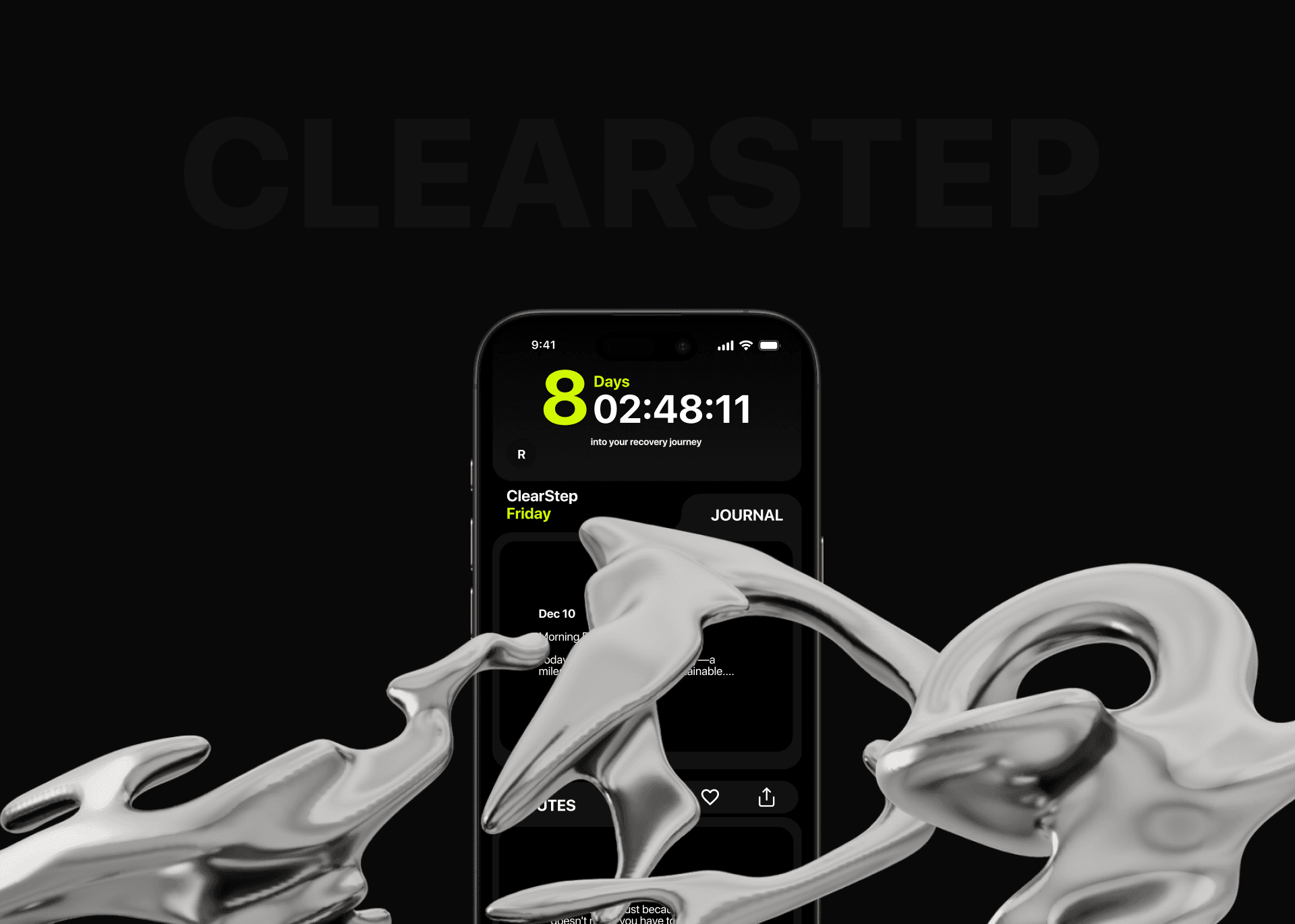
ClearStep
Overview
ClearStep is an addiction recovery app designed to support people during the hardest moments of their journey, the urges, the relapses, and the quiet days where motivation fades.
Instead of treating recovery as a numbers game, ClearStep focuses on daily presence, emotional support, and visible progress. It combines real-time urge management, habit tracking, and community motivation into a single, calm experience that feels supportive rather than overwhelming.
The goal was simple: make recovery feel achievable, human, and consistent. One clear step at a time.
Categories
Addiction Recovery
Mobile App
Methods used
Problem Framing • User Journey Mapping • Task Flow Mapping • Competitive Analysis • Interaction Design • Usability Testing
Date
Problem Statement

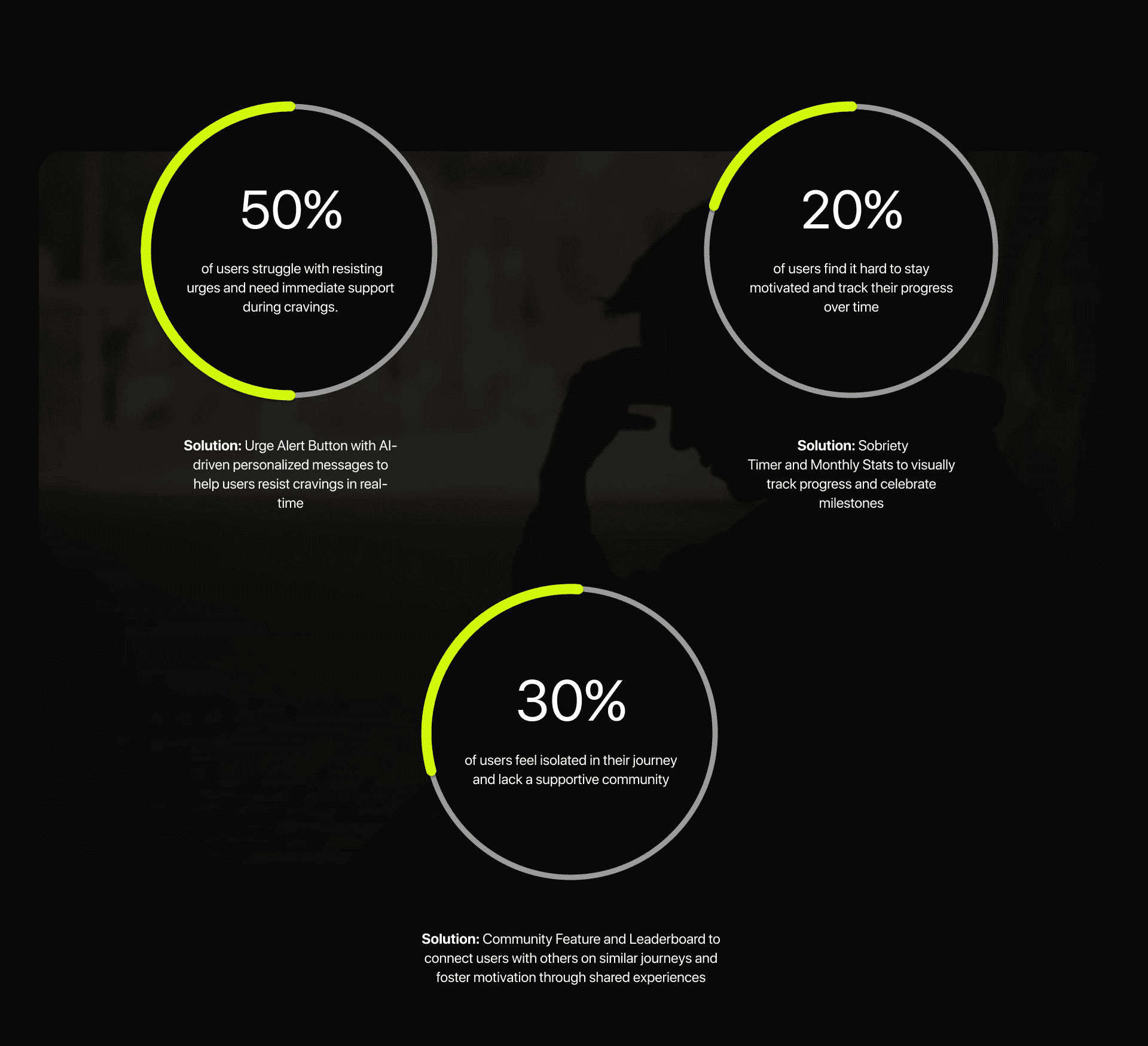
Most addiction recovery tools focus on long-term goals but fail during short-term moments the exact moments when users need help the most.
From research and observation, three recurring problems stood out:
Urges are sudden and intense, but support is often delayed or passive.
Progress feels invisible, making users question whether they’re improving at all.
Recovery can feel isolating, especially during relapses or low-motivation phases.
ClearStep needed to work in real life, not just on good days.
Solution at a Glance
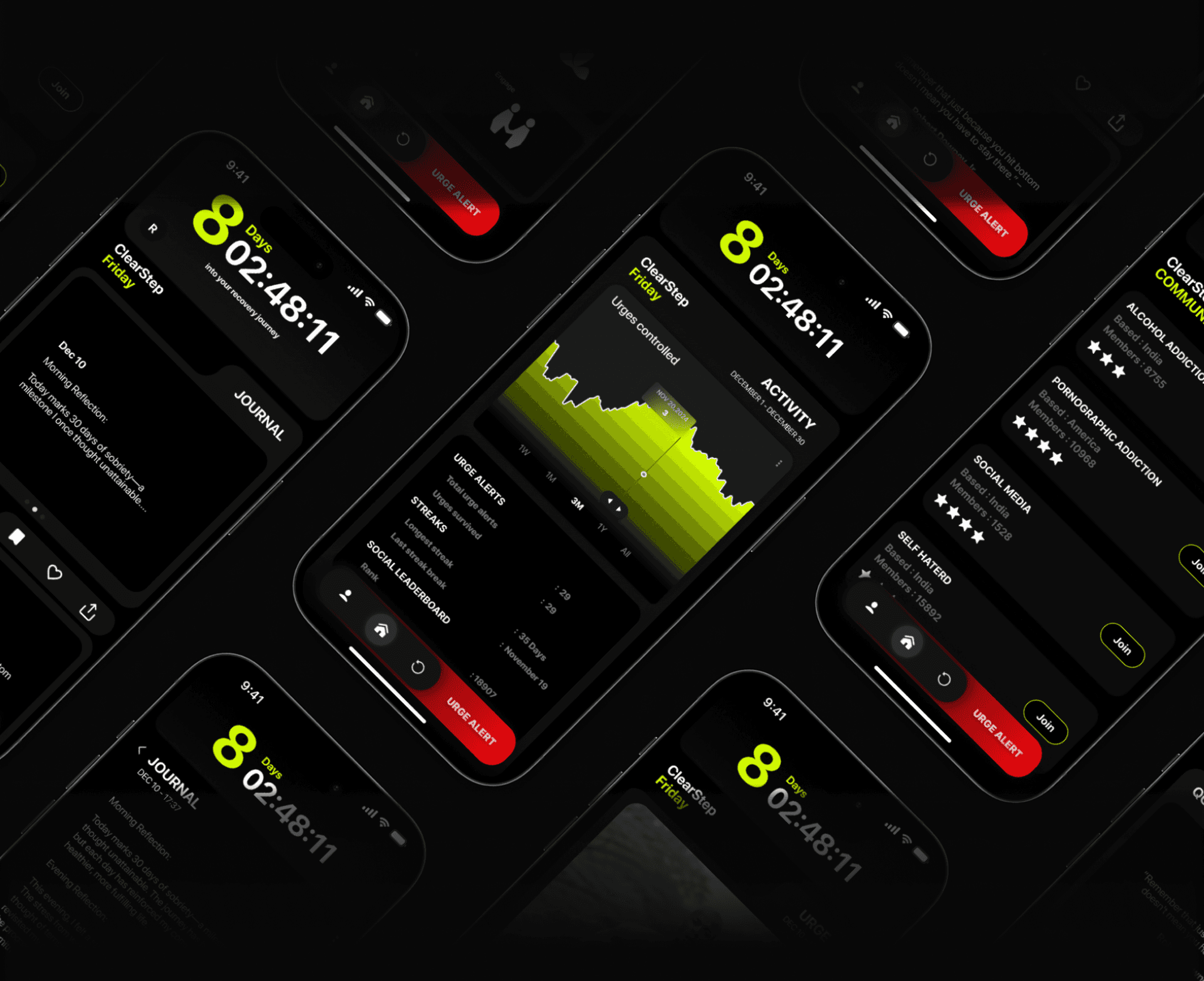
ClearStep acts as a daily recovery companion, not just a tracker.
A live sober timer makes progress visible at all times.
Urge alerts and breakers help users respond before relapse.
Activity tracking builds routine and accountability.
Gamified elements and community features reduce isolation and build motivation.
The experience stays calm, supportive, and non-judgmental.
Everything is designed to reduce friction during moments of vulnerability.
How It Started
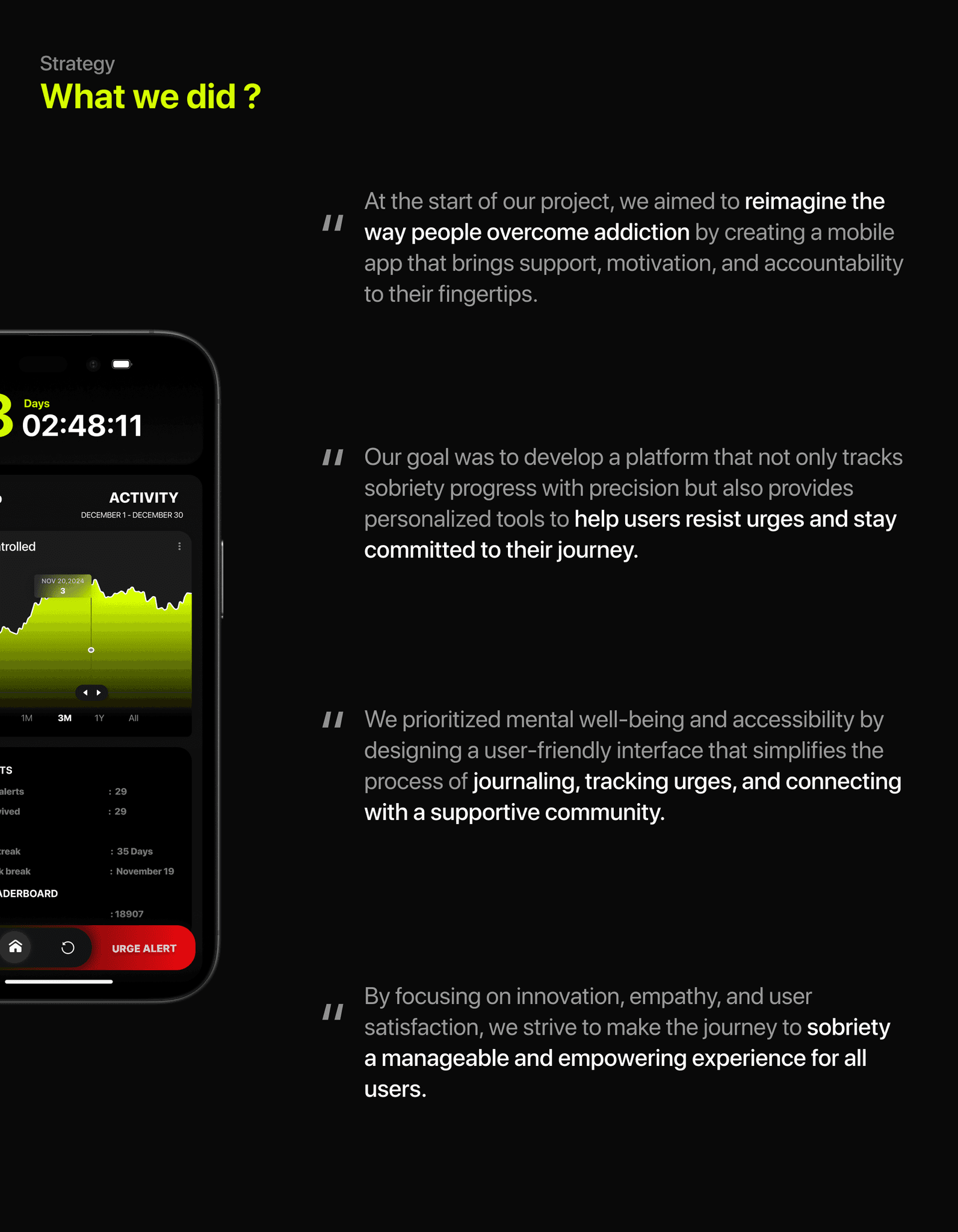
The idea for ClearStep came from noticing how recovery often breaks down not because people lack intent, but because support systems don’t show up when they’re needed most.
Instead of designing for “perfect behavior,” the project started with a different question:
What does someone need when they’re struggling , not succeeding?
This shifted the focus from long-term plans to moment-based design: urges, distractions, encouragement, and reassurance.
User Research
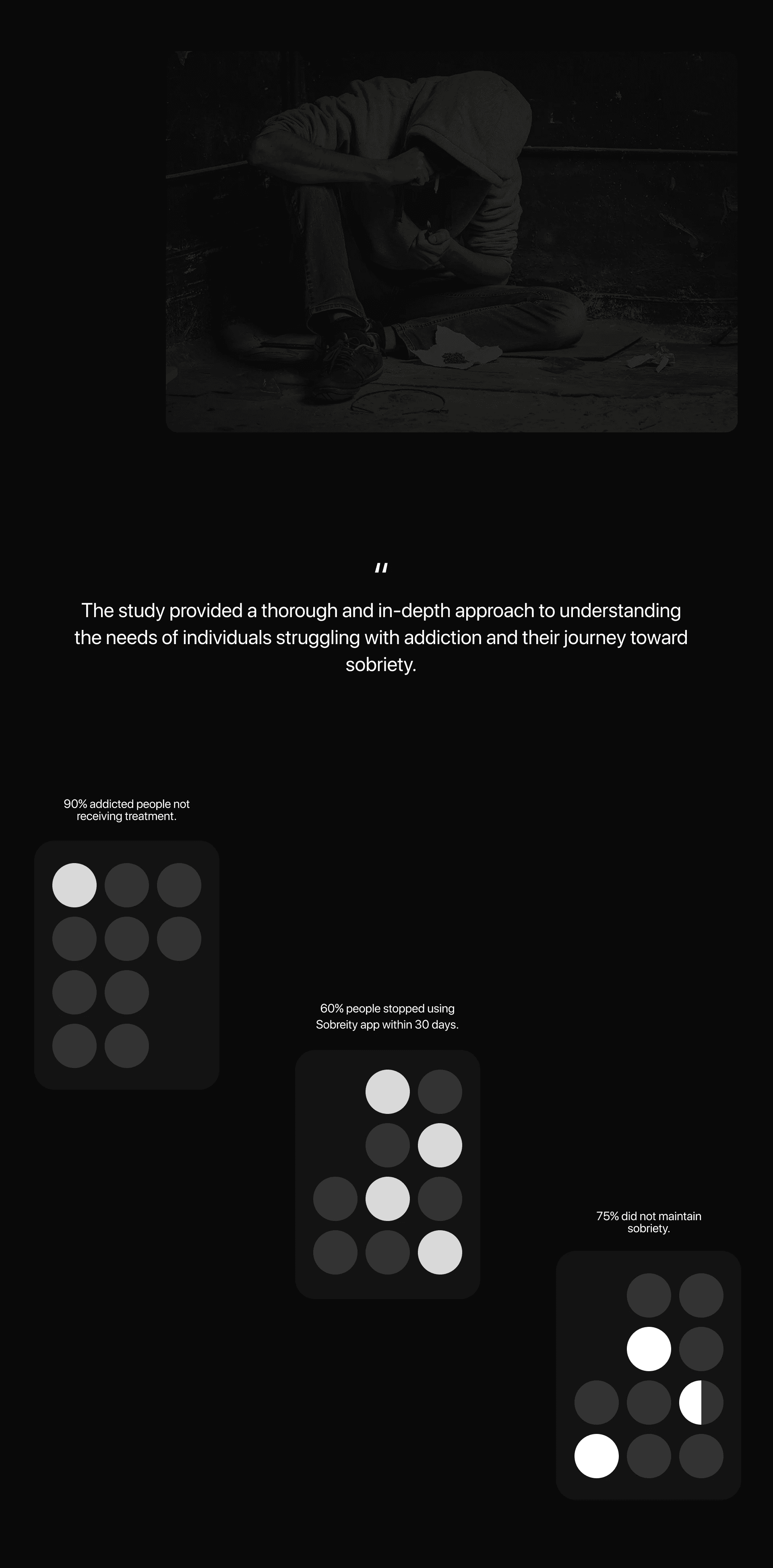
ClearStep’s direction was shaped less by assumptions and more by listening and watching.
To understand what recovery actually looks like beyond charts and streaks, I spoke to individuals who were either actively trying to quit or had gone through recovery cycles before. Some conversations were structured interviews, others were casual, unfiltered discussions where people spoke about what actually happens when no one is watching.
A recurring pattern emerged almost immediately.
Most people didn’t relapse because they didn’t care. They relapsed during very specific moments late nights, boredom, emotional stress, or sudden triggers when willpower dropped and support systems weren’t immediately available. These moments were short, intense, and deeply personal.
I also observed day-to-day behavior patterns:
Phones were often the first thing people reached for during cravings.
Long advice, reading material, or lectures were ignored during urges.
Small wins (a few hours, one clean day) mattered more emotionally than long-term goals.
Many users felt ashamed to talk about relapse, which increased isolation.
One insight stood out clearly: recovery doesn’t fail slowly it fails suddenly.
This meant ClearStep couldn’t be designed as a passive tracker or motivational journal. It had to act in the moment, when the user’s mental bandwidth was low and emotions were high.
The research shifted the entire product mindset:
From “How do we track progress?”
To “How do we help someone survive the next 10 minutes?”
That question became the foundation for the app’s features, tone, and flow.

Approach
After talking to people and observing real situations, one thing became very clear. Recovery does not happen in ideal conditions.
Most apps are designed assuming the user is calm, motivated, and ready to reflect. But the hardest moments are not like that at all. They are messy, impulsive, and often lonely. Sometimes the user does not even want to open an app. They just want the urge to pass.
So instead of designing ClearStep for best behaviour, I started designing it for bad moments. I asked myself simple but uncomfortable questions.
What does someone actually do when they are alone and struggling?
How much thinking can they realistically do in that moment?
What would help right now, not in theory but in real life?
That shift changed everything. ClearStep was no longer about tracking or discipline. It became about being present. Something that shows up quietly, without judgement.
I kept actions short and simple. During urges, the app does not ask users to analyse themselves or read long content. It gives them something immediate. A distraction, a reminder, or a small action that helps them get through the next few minutes.
Language mattered a lot. Nothing in the app blames the user or frames recovery as success versus failure. If someone slips, the app does not punish them emotionally. It helps them continue.
I also wanted users to engage on their own terms. Some days they might track everything. Other days they might open the app once and close it. ClearStep allows that inconsistency, because real recovery is inconsistent.
In the end, my approach was simple. I designed something I would not feel uncomfortable opening on my worst day.
Solution
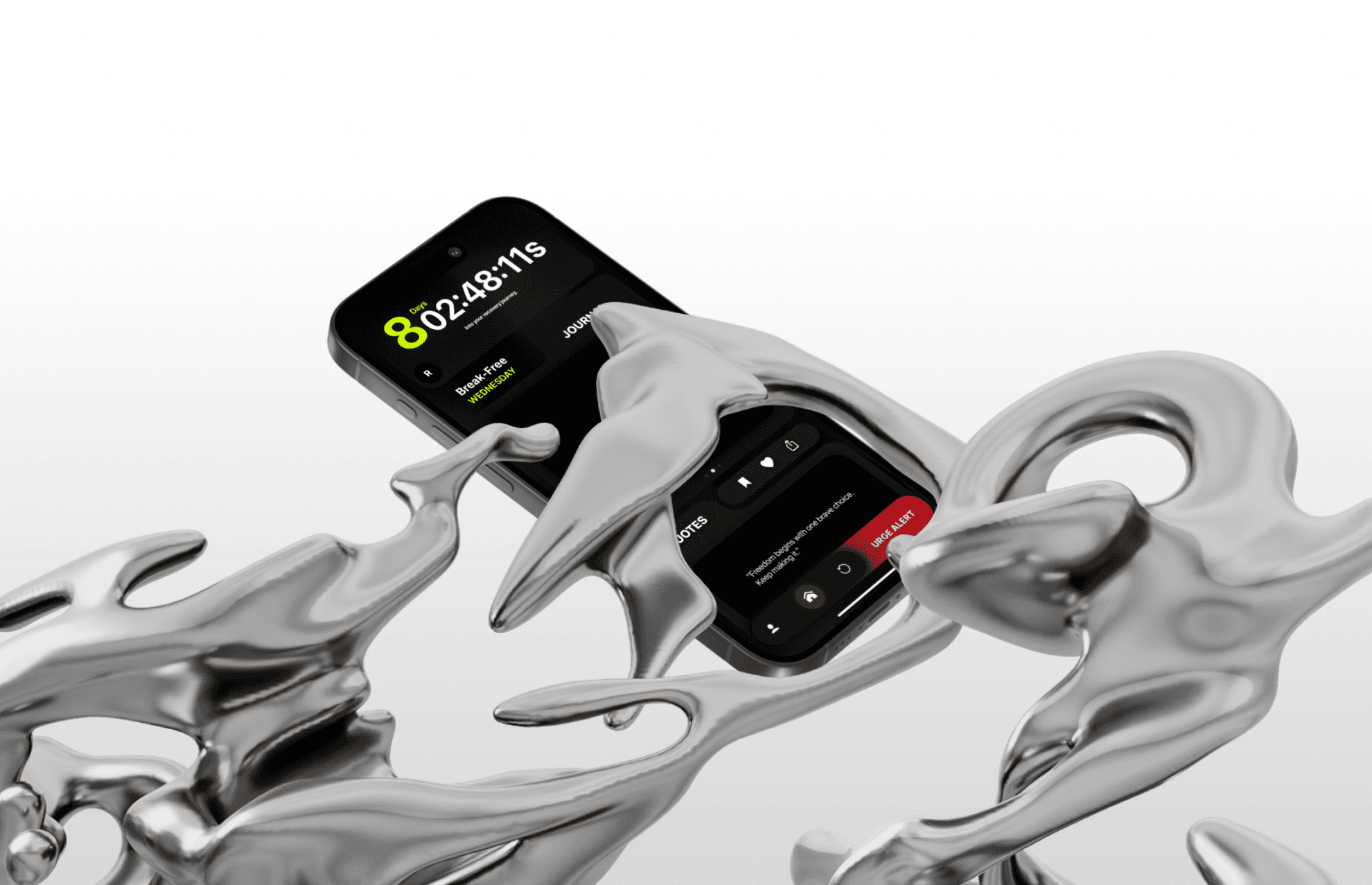
ClearStep supports recovery through simple, practical tools that work in real moments, not ideal ones.
A live sober timer keeps progress visible without demanding attention. When urges hit, the app offers quick actions like urge breakers and grounding tasks instead of reflection or long content. These are designed to help users pause and get through the moment.
Tracking is intentionally light. Users can log habits or moods when they want, without pressure to be consistent. Community and leaderboard features provide motivation without turning recovery into competition.
The interface stays calm and non-judgmental throughout. ClearStep does not push users to perform. It supports them in continuing.
Design Decisions
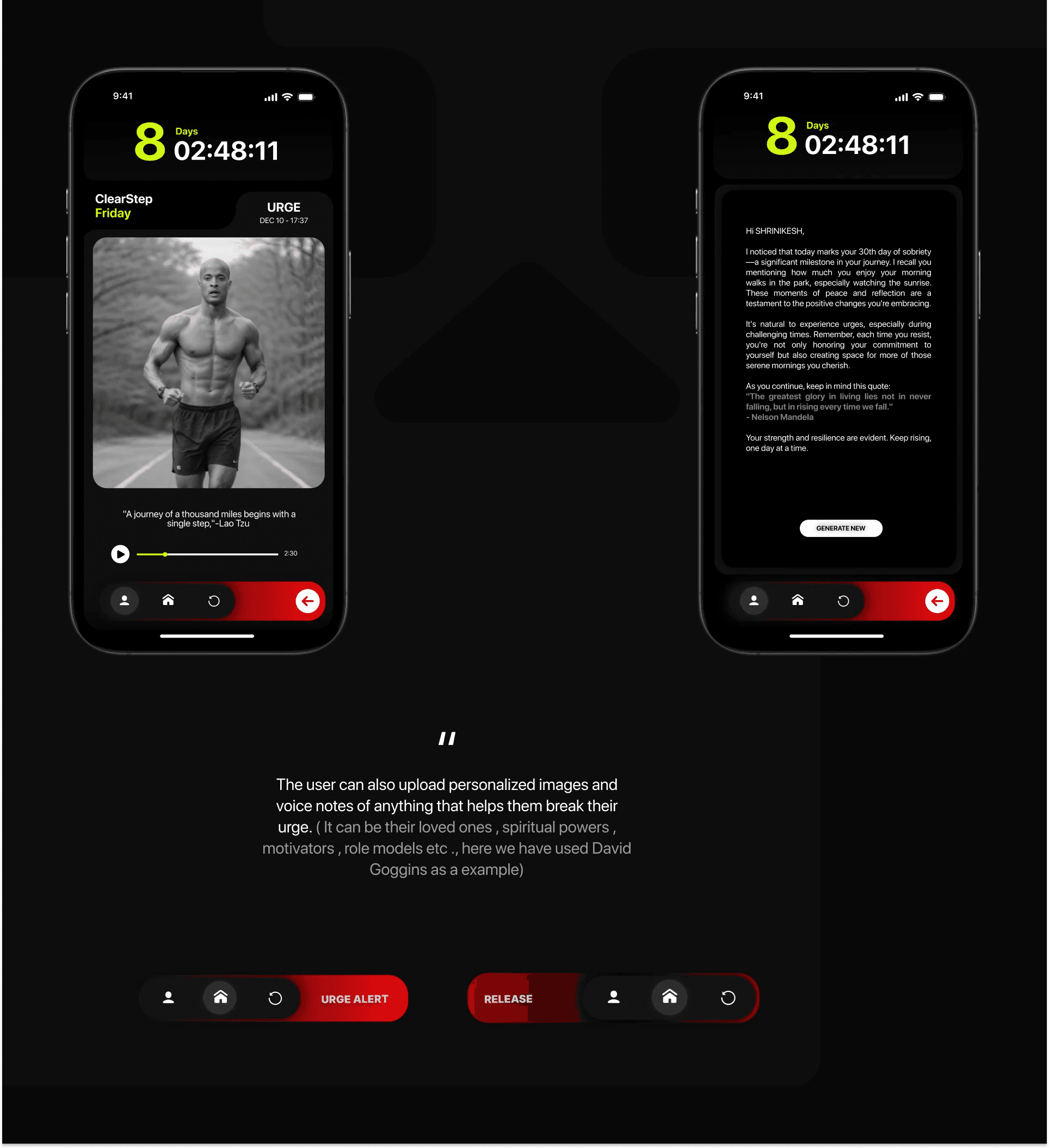
ClearStep was designed to feel safe to open, even during difficult moments.
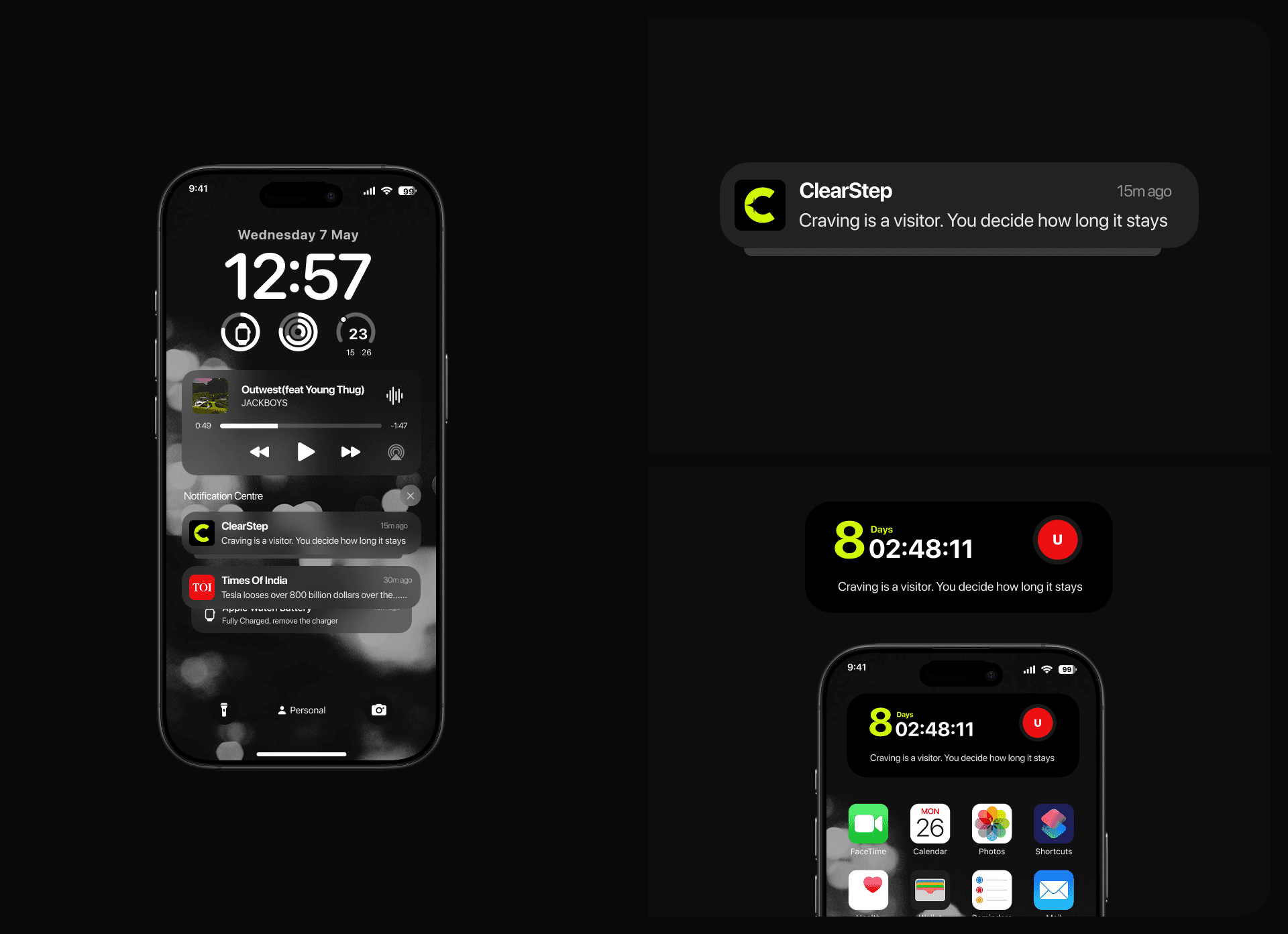
The UI uses calm colors and minimal visual noise to avoid overstimulation. Important actions like urge breakers and the sober timer are always easy to reach, so users do not have to think or search during cravings.
Language avoids guilt or judgment. The app does not frame recovery as success or failure, and users are never punished for slipping.
Gamification is kept light to motivate without pressure. Flexibility is prioritised over strict routines, allowing users to engage on their own terms.
Usage
The app should never make recovery feel heavier than it already is.
Access
Urge breakers and the sober timer are always easy to access.
Language
The app never shames users for slipping. It helps them continue.
Key Insights
Recovery breaks down in moments, not over time. Most relapses happen during short windows when support is missing and thinking is limited.
Progress feels real only when it is visible. Seeing time add up builds trust in the process more than distant goals.
During urges, users want action, not explanation. Short, immediate tools work better than long content or advice.
Shame increases isolation. A neutral, supportive tone keeps users engaged even after setbacks.
Consistency looks different for everyone. Allowing flexible use leads to longer-term engagement than enforcing strict routines.
ClearStep is built around these realities, not ideals.

Flows
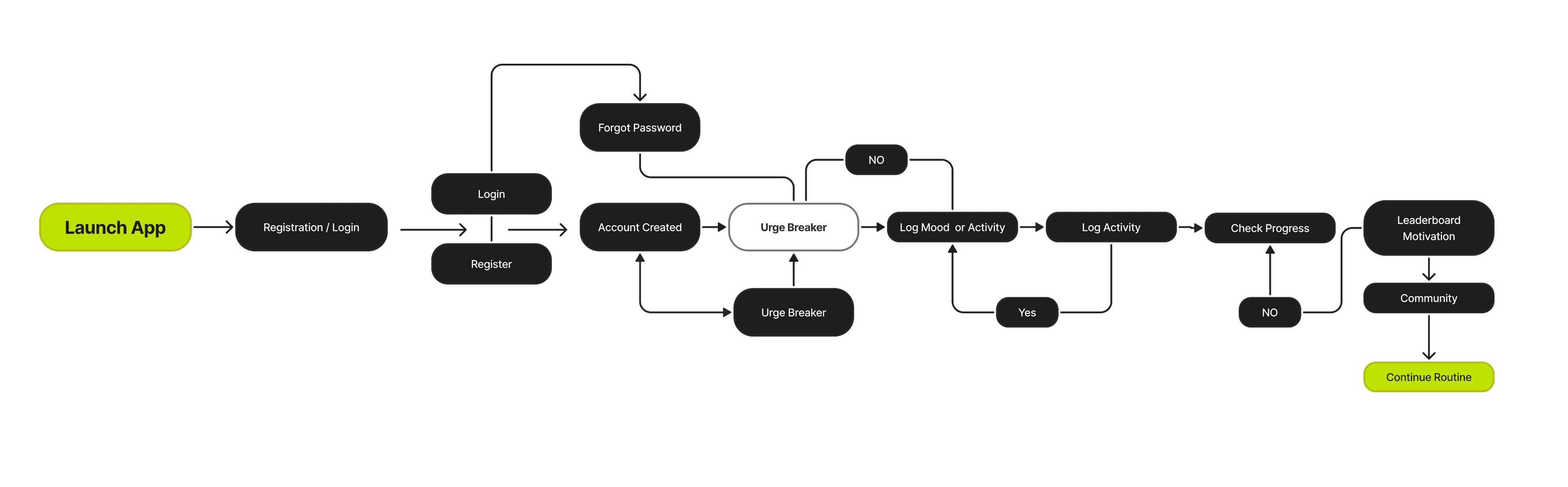
The primary user flow centers around daily use:
Open app → See sober timer / Through widget
If urge occurs → Trigger urge breaker
Log activity or mood
Check progress or leaderboard
Return to routine without friction
Secondary flows support onboarding, tracking, and community interaction without overwhelming first-time users.
UI
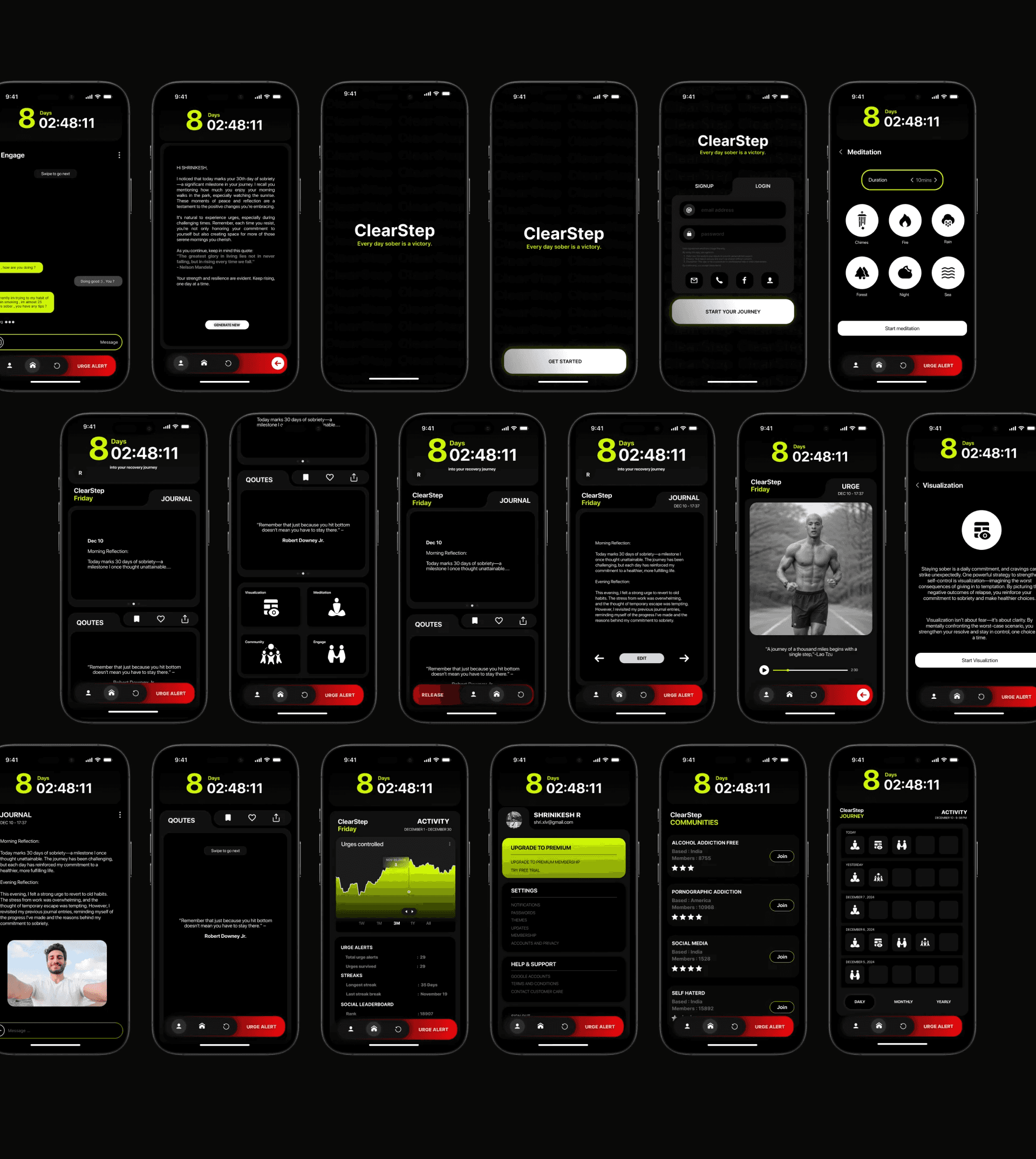
ClearStep
Overview
ClearStep is an addiction recovery app designed to support people during the hardest moments of their journey, the urges, the relapses, and the quiet days where motivation fades.
Instead of treating recovery as a numbers game, ClearStep focuses on daily presence, emotional support, and visible progress. It combines real-time urge management, habit tracking, and community motivation into a single, calm experience that feels supportive rather than overwhelming.
The goal was simple: make recovery feel achievable, human, and consistent. One clear step at a time.
Categories
Addiction Recovery
Mobile App
Methods used
Problem Framing • User Journey Mapping • Task Flow Mapping • Competitive Analysis • Interaction Design • Usability Testing
Date
Problem Statement
Most addiction recovery tools focus on long-term goals but fail during short-term moments the exact moments when users need help the most.
From research and observation, three recurring problems stood out:
Urges are sudden and intense, but support is often delayed or passive.
Progress feels invisible, making users question whether they’re improving at all.
Recovery can feel isolating, especially during relapses or low-motivation phases.
ClearStep needed to work in real life, not just on good days.
Solution at a Glance
ClearStep acts as a daily recovery companion, not just a tracker.
A live sober timer makes progress visible at all times.
Urge alerts and breakers help users respond before relapse.
Activity tracking builds routine and accountability.
Gamified elements and community features reduce isolation and build motivation.
The experience stays calm, supportive, and non-judgmental.
Everything is designed to reduce friction during moments of vulnerability.
How It Started
The idea for ClearStep came from noticing how recovery often breaks down not because people lack intent, but because support systems don’t show up when they’re needed most.
Instead of designing for “perfect behavior,” the project started with a different question:
What does someone need when they’re struggling , not succeeding?
This shifted the focus from long-term plans to moment-based design: urges, distractions, encouragement, and reassurance.
User Research
ClearStep’s direction was shaped less by assumptions and more by listening and watching.
To understand what recovery actually looks like beyond charts and streaks, I spoke to individuals who were either actively trying to quit or had gone through recovery cycles before. Some conversations were structured interviews, others were casual, unfiltered discussions where people spoke about what actually happens when no one is watching.
A recurring pattern emerged almost immediately.
Most people didn’t relapse because they didn’t care. They relapsed during very specific moments late nights, boredom, emotional stress, or sudden triggers when willpower dropped and support systems weren’t immediately available. These moments were short, intense, and deeply personal.
I also observed day-to-day behavior patterns:
Phones were often the first thing people reached for during cravings.
Long advice, reading material, or lectures were ignored during urges.
Small wins (a few hours, one clean day) mattered more emotionally than long-term goals.
Many users felt ashamed to talk about relapse, which increased isolation.
One insight stood out clearly: recovery doesn’t fail slowly it fails suddenly.
This meant ClearStep couldn’t be designed as a passive tracker or motivational journal. It had to act in the moment, when the user’s mental bandwidth was low and emotions were high.
The research shifted the entire product mindset:
From “How do we track progress?”
To “How do we help someone survive the next 10 minutes?”
That question became the foundation for the app’s features, tone, and flow.
Approach
After talking to people and observing real situations, one thing became very clear. Recovery does not happen in ideal conditions.
Most apps are designed assuming the user is calm, motivated, and ready to reflect. But the hardest moments are not like that at all. They are messy, impulsive, and often lonely. Sometimes the user does not even want to open an app. They just want the urge to pass.
So instead of designing ClearStep for best behaviour, I started designing it for bad moments. I asked myself simple but uncomfortable questions.
What does someone actually do when they are alone and struggling?
How much thinking can they realistically do in that moment?
What would help right now, not in theory but in real life?
That shift changed everything. ClearStep was no longer about tracking or discipline. It became about being present. Something that shows up quietly, without judgement.
I kept actions short and simple. During urges, the app does not ask users to analyse themselves or read long content. It gives them something immediate. A distraction, a reminder, or a small action that helps them get through the next few minutes.
Language mattered a lot. Nothing in the app blames the user or frames recovery as success versus failure. If someone slips, the app does not punish them emotionally. It helps them continue.
I also wanted users to engage on their own terms. Some days they might track everything. Other days they might open the app once and close it. ClearStep allows that inconsistency, because real recovery is inconsistent.
In the end, my approach was simple. I designed something I would not feel uncomfortable opening on my worst day.
Solution
ClearStep supports recovery through simple, practical tools that work in real moments, not ideal ones.
A live sober timer keeps progress visible without demanding attention. When urges hit, the app offers quick actions like urge breakers and grounding tasks instead of reflection or long content. These are designed to help users pause and get through the moment.
Tracking is intentionally light. Users can log habits or moods when they want, without pressure to be consistent. Community and leaderboard features provide motivation without turning recovery into competition.
The interface stays calm and non-judgmental throughout. ClearStep does not push users to perform. It supports them in continuing.
Design Decisions
ClearStep was designed to feel safe to open, even during difficult moments.
The UI uses calm colors and minimal visual noise to avoid overstimulation. Important actions like urge breakers and the sober timer are always easy to reach, so users do not have to think or search during cravings.
Language avoids guilt or judgment. The app does not frame recovery as success or failure, and users are never punished for slipping.
Gamification is kept light to motivate without pressure. Flexibility is prioritised over strict routines, allowing users to engage on their own terms.
Usage
The app should never make recovery feel heavier than it already is.
Access
Urge breakers and the sober timer are always easy to access.
Language
The app never shames users for slipping. It helps them continue.
Key Insights
Recovery breaks down in moments, not over time. Most relapses happen during short windows when support is missing and thinking is limited.
Progress feels real only when it is visible. Seeing time add up builds trust in the process more than distant goals.
During urges, users want action, not explanation. Short, immediate tools work better than long content or advice.
Shame increases isolation. A neutral, supportive tone keeps users engaged even after setbacks.
Consistency looks different for everyone. Allowing flexible use leads to longer-term engagement than enforcing strict routines.
ClearStep is built around these realities, not ideals.
Flows
The primary user flow centers around daily use:
Open app → See sober timer / Through widget
If urge occurs → Trigger urge breaker
Log activity or mood
Check progress or leaderboard
Return to routine without friction
Secondary flows support onboarding, tracking, and community interaction without overwhelming first-time users.
UI
ClearStep
Overview
ClearStep is an addiction recovery app designed to support people during the hardest moments of their journey, the urges, the relapses, and the quiet days where motivation fades.
Instead of treating recovery as a numbers game, ClearStep focuses on daily presence, emotional support, and visible progress. It combines real-time urge management, habit tracking, and community motivation into a single, calm experience that feels supportive rather than overwhelming.
The goal was simple: make recovery feel achievable, human, and consistent. One clear step at a time.
Categories
Addiction Recovery
Mobile App
Methods used
Problem Framing • User Journey Mapping • Task Flow Mapping • Competitive Analysis • Interaction Design • Usability Testing
Date
Problem Statement
Most addiction recovery tools focus on long-term goals but fail during short-term moments the exact moments when users need help the most.
From research and observation, three recurring problems stood out:
Urges are sudden and intense, but support is often delayed or passive.
Progress feels invisible, making users question whether they’re improving at all.
Recovery can feel isolating, especially during relapses or low-motivation phases.
ClearStep needed to work in real life, not just on good days.
Solution at a Glance
ClearStep acts as a daily recovery companion, not just a tracker.
A live sober timer makes progress visible at all times.
Urge alerts and breakers help users respond before relapse.
Activity tracking builds routine and accountability.
Gamified elements and community features reduce isolation and build motivation.
The experience stays calm, supportive, and non-judgmental.
Everything is designed to reduce friction during moments of vulnerability.
How It Started
The idea for ClearStep came from noticing how recovery often breaks down not because people lack intent, but because support systems don’t show up when they’re needed most.
Instead of designing for “perfect behavior,” the project started with a different question:
What does someone need when they’re struggling , not succeeding?
This shifted the focus from long-term plans to moment-based design: urges, distractions, encouragement, and reassurance.
User Research
ClearStep’s direction was shaped less by assumptions and more by listening and watching.
To understand what recovery actually looks like beyond charts and streaks, I spoke to individuals who were either actively trying to quit or had gone through recovery cycles before. Some conversations were structured interviews, others were casual, unfiltered discussions where people spoke about what actually happens when no one is watching.
A recurring pattern emerged almost immediately.
Most people didn’t relapse because they didn’t care. They relapsed during very specific moments late nights, boredom, emotional stress, or sudden triggers when willpower dropped and support systems weren’t immediately available. These moments were short, intense, and deeply personal.
I also observed day-to-day behavior patterns:
Phones were often the first thing people reached for during cravings.
Long advice, reading material, or lectures were ignored during urges.
Small wins (a few hours, one clean day) mattered more emotionally than long-term goals.
Many users felt ashamed to talk about relapse, which increased isolation.
One insight stood out clearly: recovery doesn’t fail slowly it fails suddenly.
This meant ClearStep couldn’t be designed as a passive tracker or motivational journal. It had to act in the moment, when the user’s mental bandwidth was low and emotions were high.
The research shifted the entire product mindset:
From “How do we track progress?”
To “How do we help someone survive the next 10 minutes?”
That question became the foundation for the app’s features, tone, and flow.
Approach
After talking to people and observing real situations, one thing became very clear. Recovery does not happen in ideal conditions.
Most apps are designed assuming the user is calm, motivated, and ready to reflect. But the hardest moments are not like that at all. They are messy, impulsive, and often lonely. Sometimes the user does not even want to open an app. They just want the urge to pass.
So instead of designing ClearStep for best behaviour, I started designing it for bad moments. I asked myself simple but uncomfortable questions.
What does someone actually do when they are alone and struggling?
How much thinking can they realistically do in that moment?
What would help right now, not in theory but in real life?
That shift changed everything. ClearStep was no longer about tracking or discipline. It became about being present. Something that shows up quietly, without judgement.
I kept actions short and simple. During urges, the app does not ask users to analyse themselves or read long content. It gives them something immediate. A distraction, a reminder, or a small action that helps them get through the next few minutes.
Language mattered a lot. Nothing in the app blames the user or frames recovery as success versus failure. If someone slips, the app does not punish them emotionally. It helps them continue.
I also wanted users to engage on their own terms. Some days they might track everything. Other days they might open the app once and close it. ClearStep allows that inconsistency, because real recovery is inconsistent.
In the end, my approach was simple. I designed something I would not feel uncomfortable opening on my worst day.
Solution
ClearStep supports recovery through simple, practical tools that work in real moments, not ideal ones.
A live sober timer keeps progress visible without demanding attention. When urges hit, the app offers quick actions like urge breakers and grounding tasks instead of reflection or long content. These are designed to help users pause and get through the moment.
Tracking is intentionally light. Users can log habits or moods when they want, without pressure to be consistent. Community and leaderboard features provide motivation without turning recovery into competition.
The interface stays calm and non-judgmental throughout. ClearStep does not push users to perform. It supports them in continuing.
Design Decisions
ClearStep was designed to feel safe to open, even during difficult moments.
The UI uses calm colors and minimal visual noise to avoid overstimulation. Important actions like urge breakers and the sober timer are always easy to reach, so users do not have to think or search during cravings.
Language avoids guilt or judgment. The app does not frame recovery as success or failure, and users are never punished for slipping.
Gamification is kept light to motivate without pressure. Flexibility is prioritised over strict routines, allowing users to engage on their own terms.
Usage
The app should never make recovery feel heavier than it already is.
Access
Urge breakers and the sober timer are always easy to access.
Language
The app never shames users for slipping. It helps them continue.
Key Insights
Recovery breaks down in moments, not over time. Most relapses happen during short windows when support is missing and thinking is limited.
Progress feels real only when it is visible. Seeing time add up builds trust in the process more than distant goals.
During urges, users want action, not explanation. Short, immediate tools work better than long content or advice.
Shame increases isolation. A neutral, supportive tone keeps users engaged even after setbacks.
Consistency looks different for everyone. Allowing flexible use leads to longer-term engagement than enforcing strict routines.
ClearStep is built around these realities, not ideals.
Flows
The primary user flow centers around daily use:
Open app → See sober timer / Through widget
If urge occurs → Trigger urge breaker
Log activity or mood
Check progress or leaderboard
Return to routine without friction
Secondary flows support onboarding, tracking, and community interaction without overwhelming first-time users.
UI