Threadline
Overview
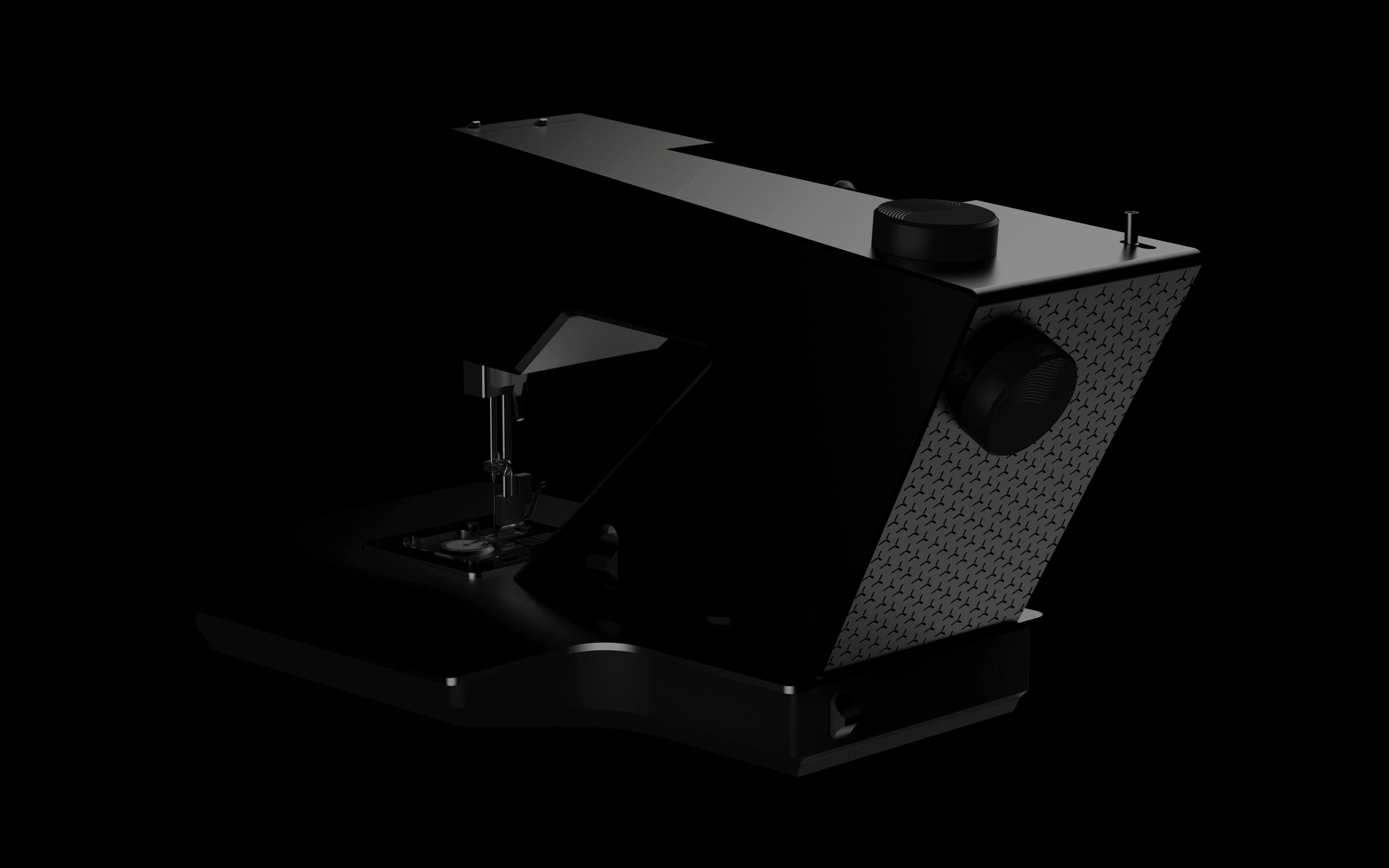
Threadline is a reimagined sewing machine designed for a new generation of creators, designers, and DIY makers. Built around a sculptural Z-frame silhouette and a matte-black body, the project challenges the outdated visual and functional language of domestic sewing machines.
As sewing sees a resurgence among younger users driven by sustainability, customization, and maker culture, the tools supporting this craft have not evolved to meet them. Threadline explores how a sewing machine can feel modern, intuitive, and inspiring while remaining functional and grounded in real use.
This project focuses on form, ergonomics, clarity, and emotional appeal through an industrial design lens.
Categories
Consumer Electronics
Sewing Machine
Methods used
roduct Research • Competitive Benchmarking • CMF Exploration • Form Development • CAD Modeling • Visual Prototyping
Date
Problem Statement
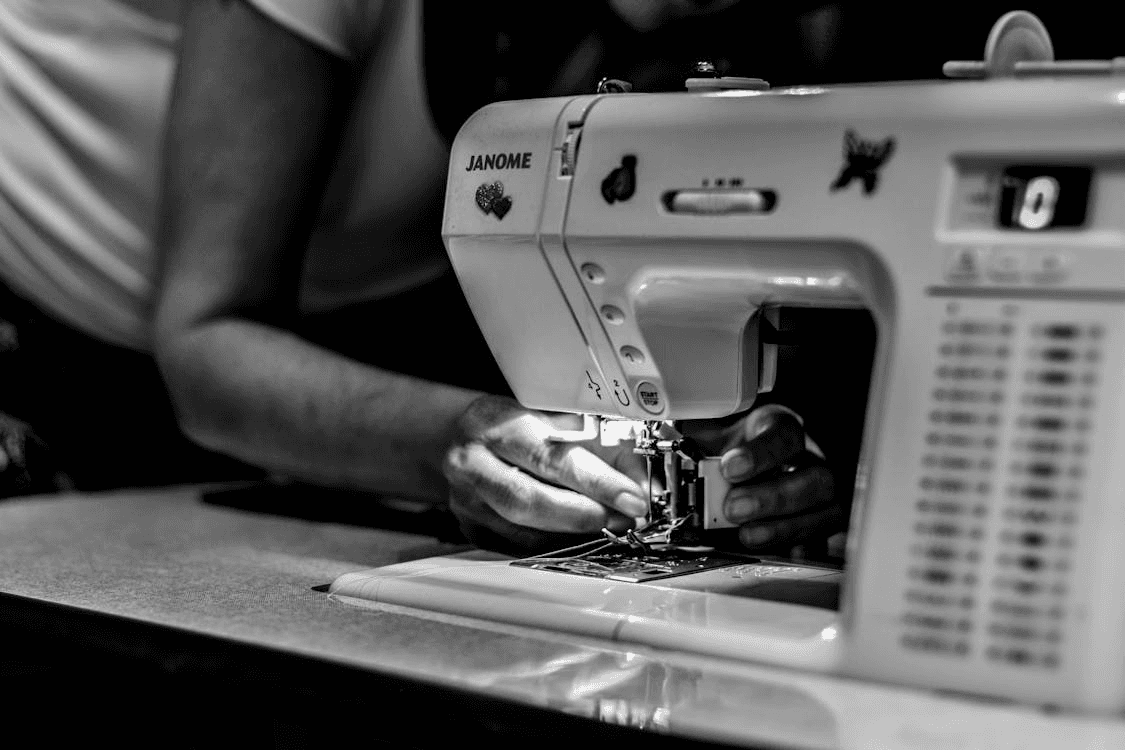
While sewing machines have advanced technically, their design language has remained largely unchanged.
Most machines on the market today:
Appear bulky and visually dated
Rely on overcrowded buttons and printed stitch diagrams
Have steep learning curves for beginners
Are heavy and difficult to store in smaller modern homes
Treat sewing as a utility task rather than a creative practice
For Gen Z and Millennial users, aesthetics and usability are as important as functionality. The category has failed to reflect that shift, creating a clear opportunity for a modern, approachable, and design-forward sewing machine.
Solution at a Glance
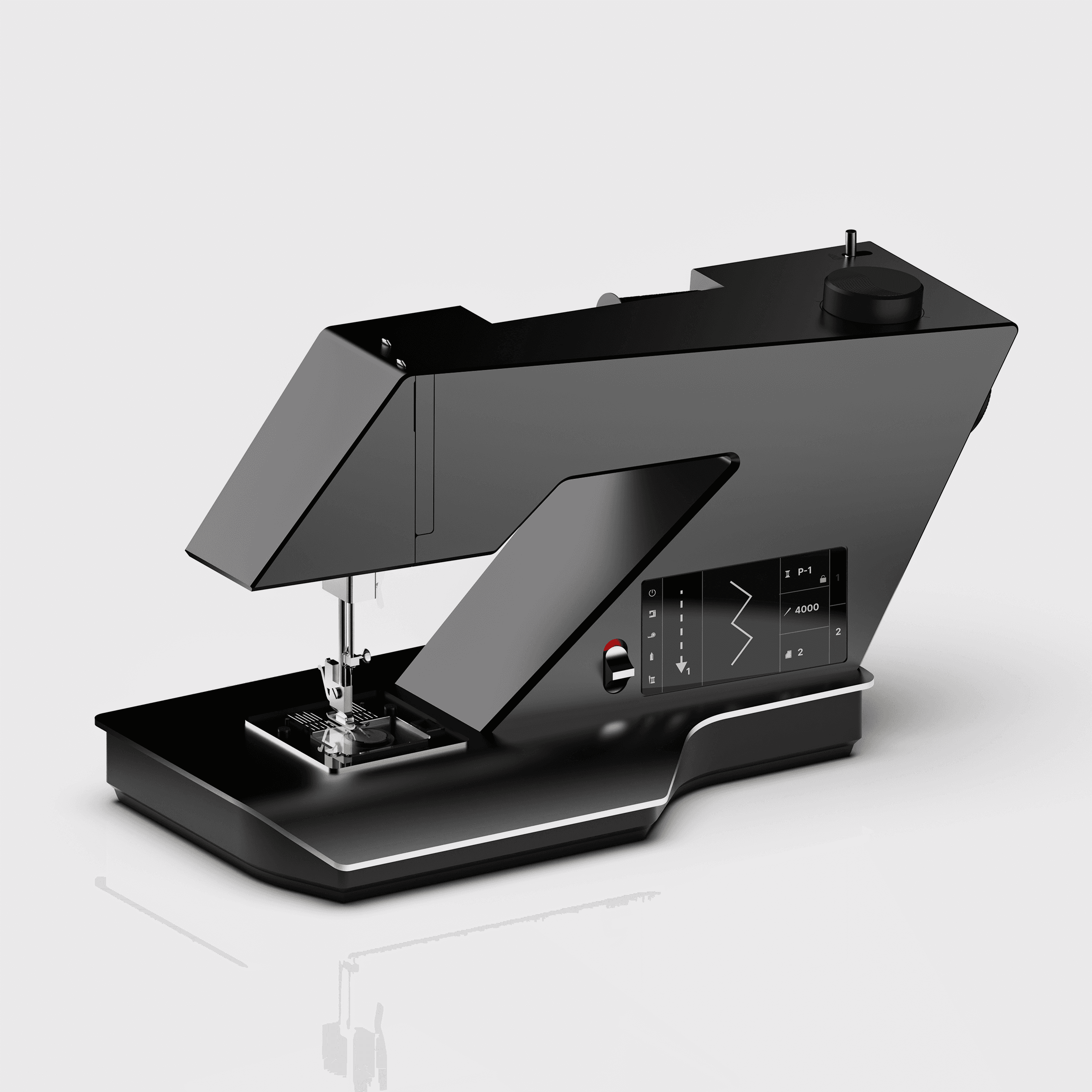
Threadline simplifies sewing by rethinking the machine as a creative tool first, not an appliance.
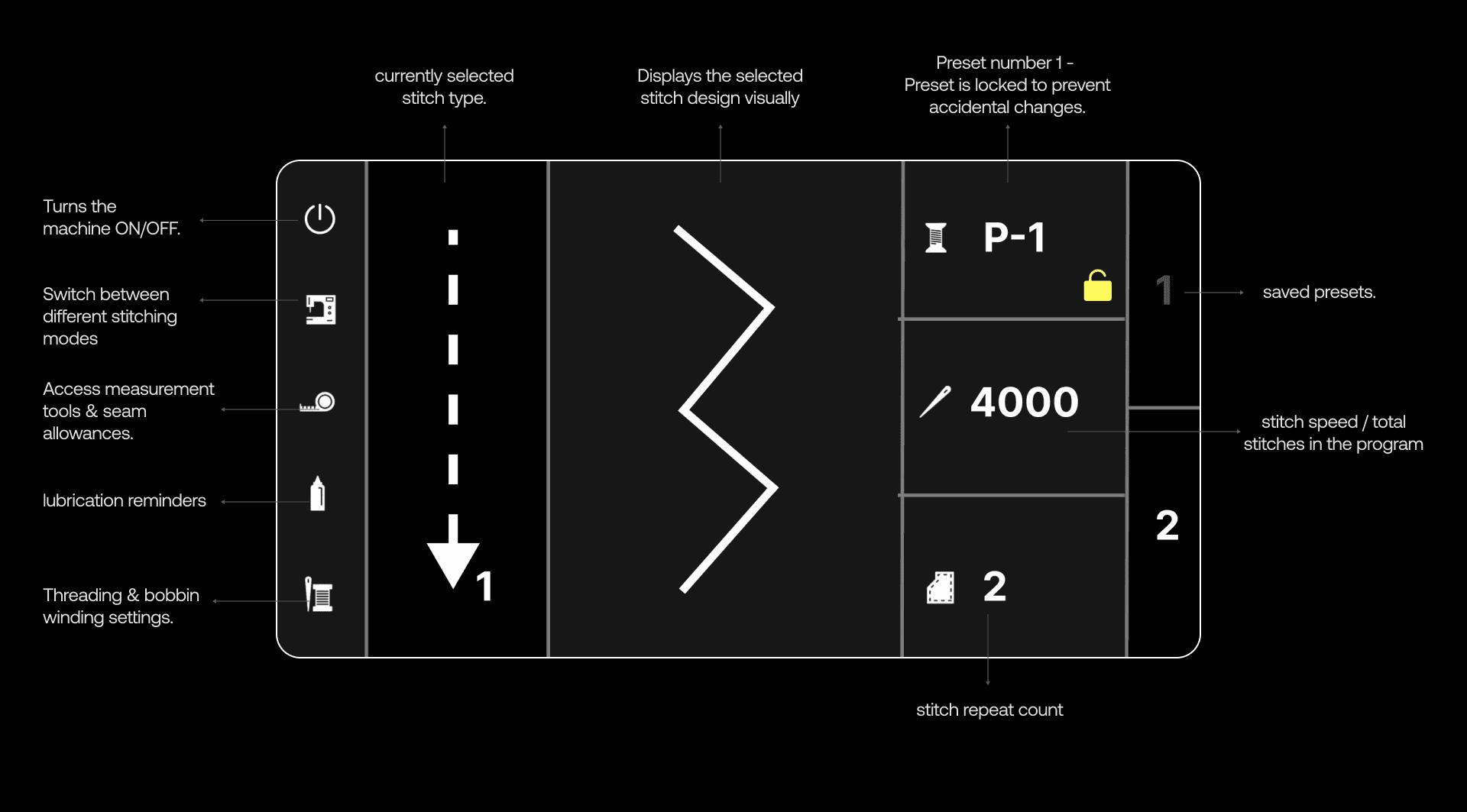
It introduces a clean structural form, reduced visual complexity, and an intuitive physical layout that lowers the barrier to entry for beginners while remaining capable for experienced users. The design prioritizes clarity, portability, and presence, making the machine something users want to interact with and display.
How It Started
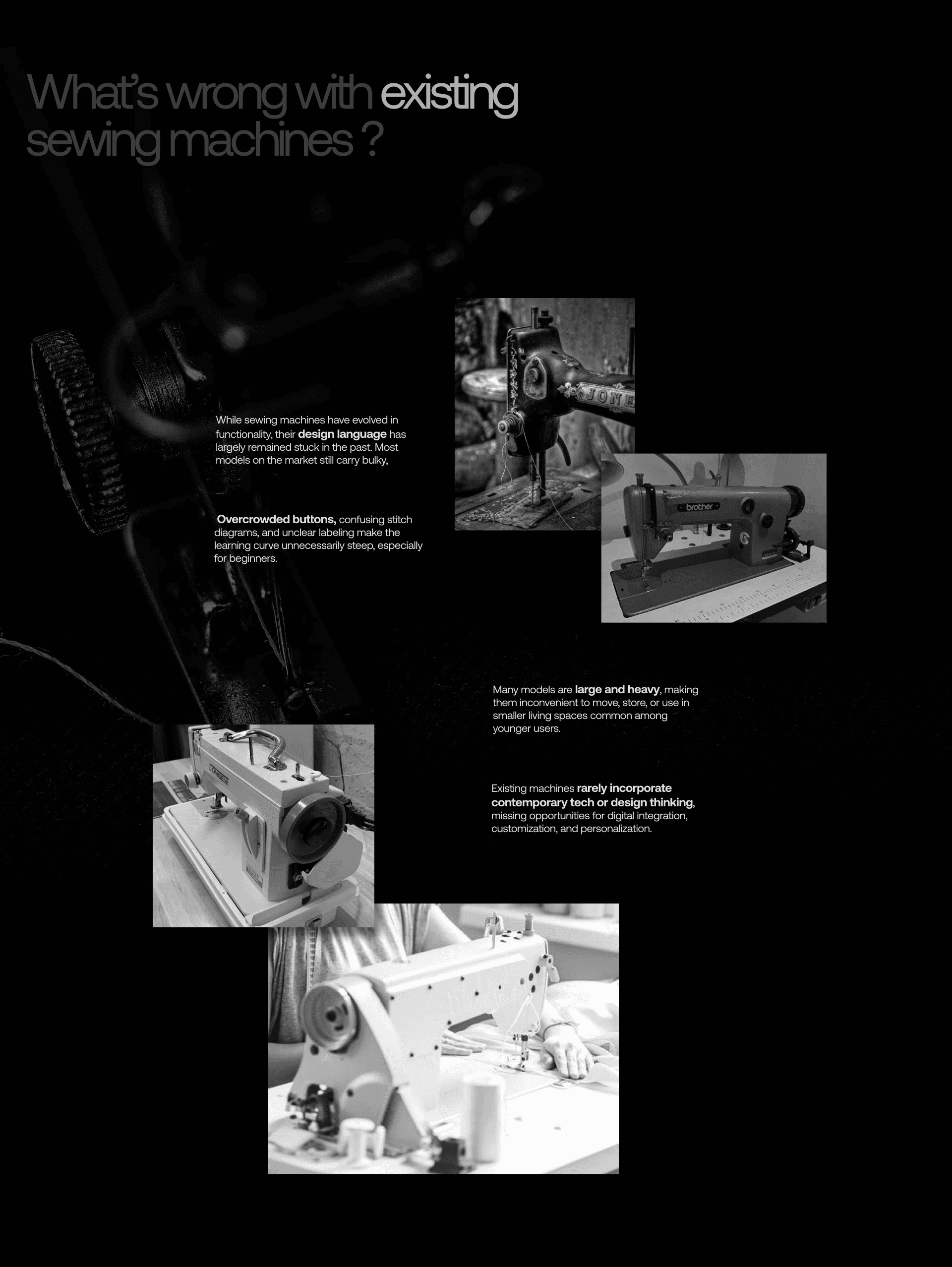
The project began with observing how sewing machines are perceived today.
Despite renewed interest in sewing among younger users, most machines still feel intimidating and outdated. They are often hidden away, brought out only when necessary, and rarely treated as objects of pride.
Early sketching focused on one question:
What would a sewing machine look like if it were designed today, for today’s creators?
Instead of starting with buttons or features, I began with silhouette, posture, and presence. The Z-frame emerged as a way to give the machine a strong identity while reducing visual mass and improving balance.
User Research
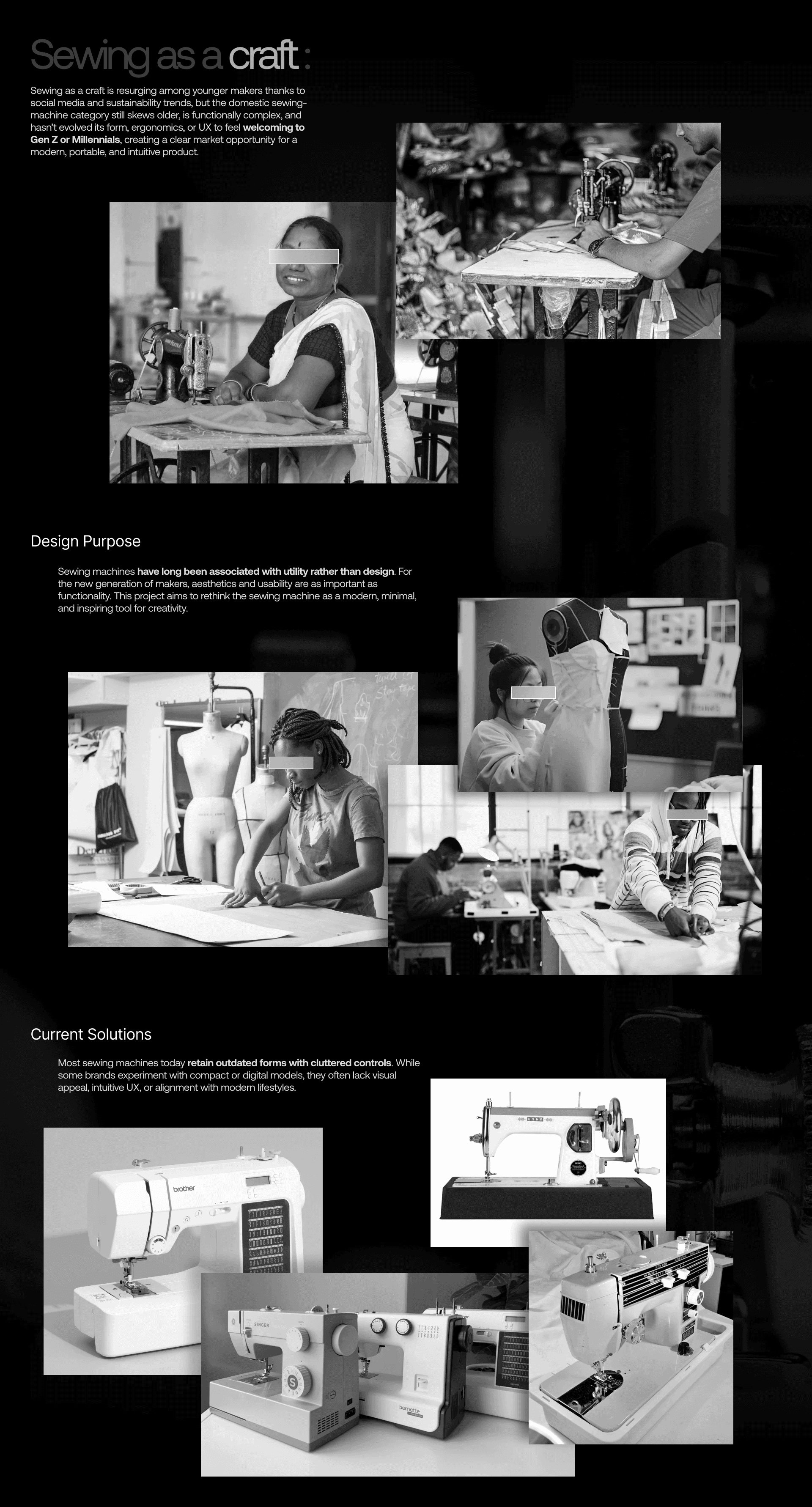
The research for Threadline started with noticing a contradiction.
Sewing is clearly making a comeback. Social platforms are filled with creators upcycling clothes, designing their own garments, and learning to sew from scratch. Sustainability, personalization, and slow making are driving real interest among younger users. Yet the tools meant to support this resurgence feel frozen in time.
I began by speaking with students, hobbyists, and first-time sewers who were curious about learning but hesitant to start. Many owned sewing machines that sat unused. Others had considered buying one but backed out after seeing how complex they looked.
A recurring comment kept coming up:
“It looks like I need to learn the machine before I can learn to sew.”
I spent time observing how people interacted with existing machines. Before even turning them on, users would pause. They scanned the surface, tried to understand the diagrams, and hesitated. Buttons, dials, and stitch charts competed for attention, creating anxiety before the first stitch was made.
For beginners, the problem was not capability. It was confidence.
Another pattern became clear when discussing living spaces. Most younger users live in smaller homes or shared apartments. Large, heavy machines felt inconvenient and out of place. They were often stored away, which created friction even before use. If setting up feels like a task, creative momentum is lost.
More experienced users shared a different frustration. While they understood the controls, they felt disconnected from the machines visually. The products did not reflect their identity as designers or makers. Sewing machines felt like appliances, not creative tools.
This research highlighted a clear gap. Sewing as a craft had evolved, but sewing machines had not. The category was still designed for utility and tradition, not for modern creative lifestyles.
Threadline emerged as a response to that gap. Not by adding more features, but by rethinking how a sewing machine should look, feel, and invite someone in.
Approach
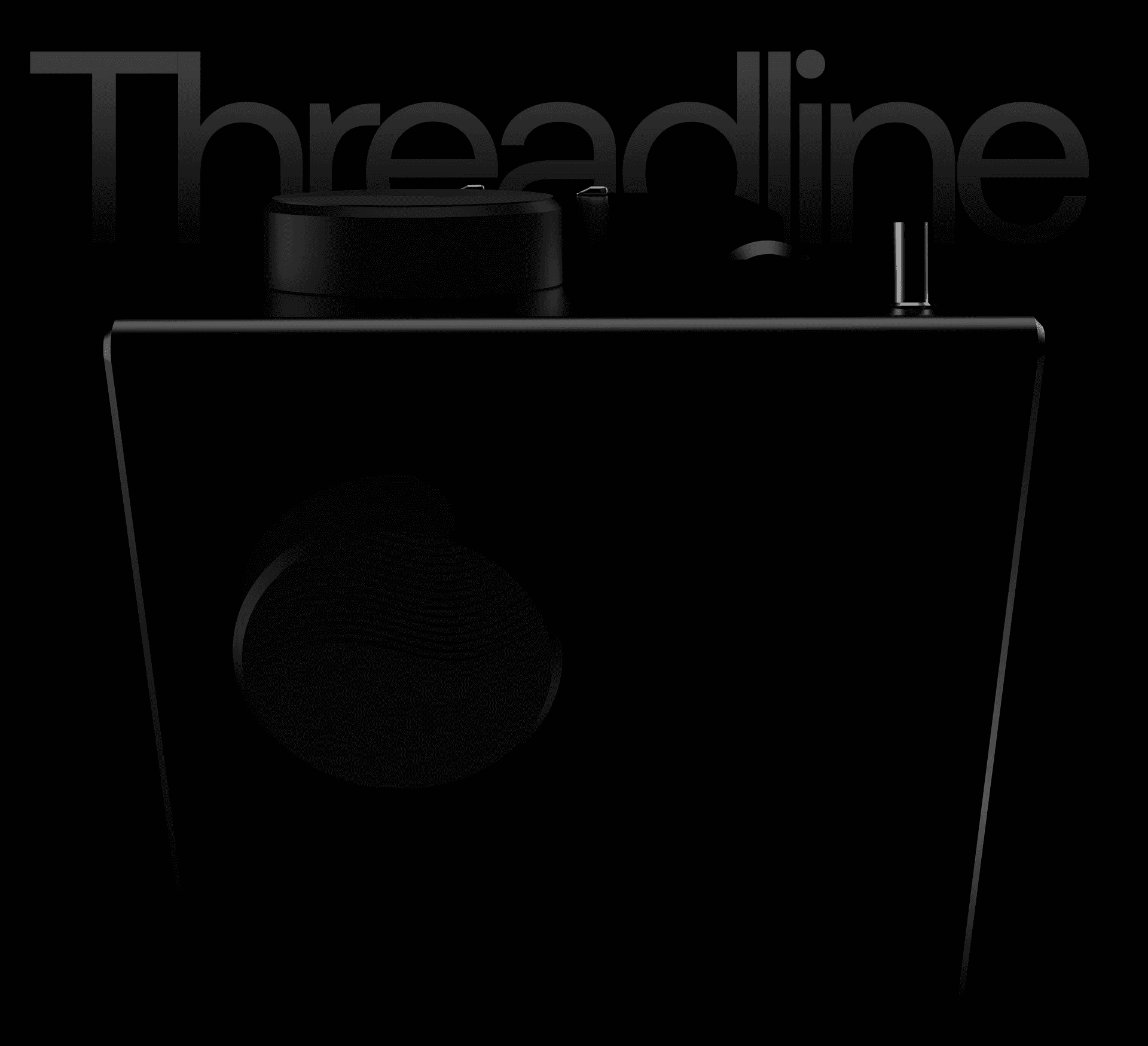
The approach was to remove intimidation through form and clarity.
Instead of hiding complexity behind more controls, the design reduces visible elements and lets the structure communicate purpose. The machine is designed to feel confident and understandable at first glance.
I treated the sewing machine as an object that lives in a space, not just a tool used occasionally. This meant focusing on proportions, balance, and how the product feels when placed on a desk, carried, or stored.
Every design decision was evaluated against one question:
Does this make sewing feel more approachable?
Solution
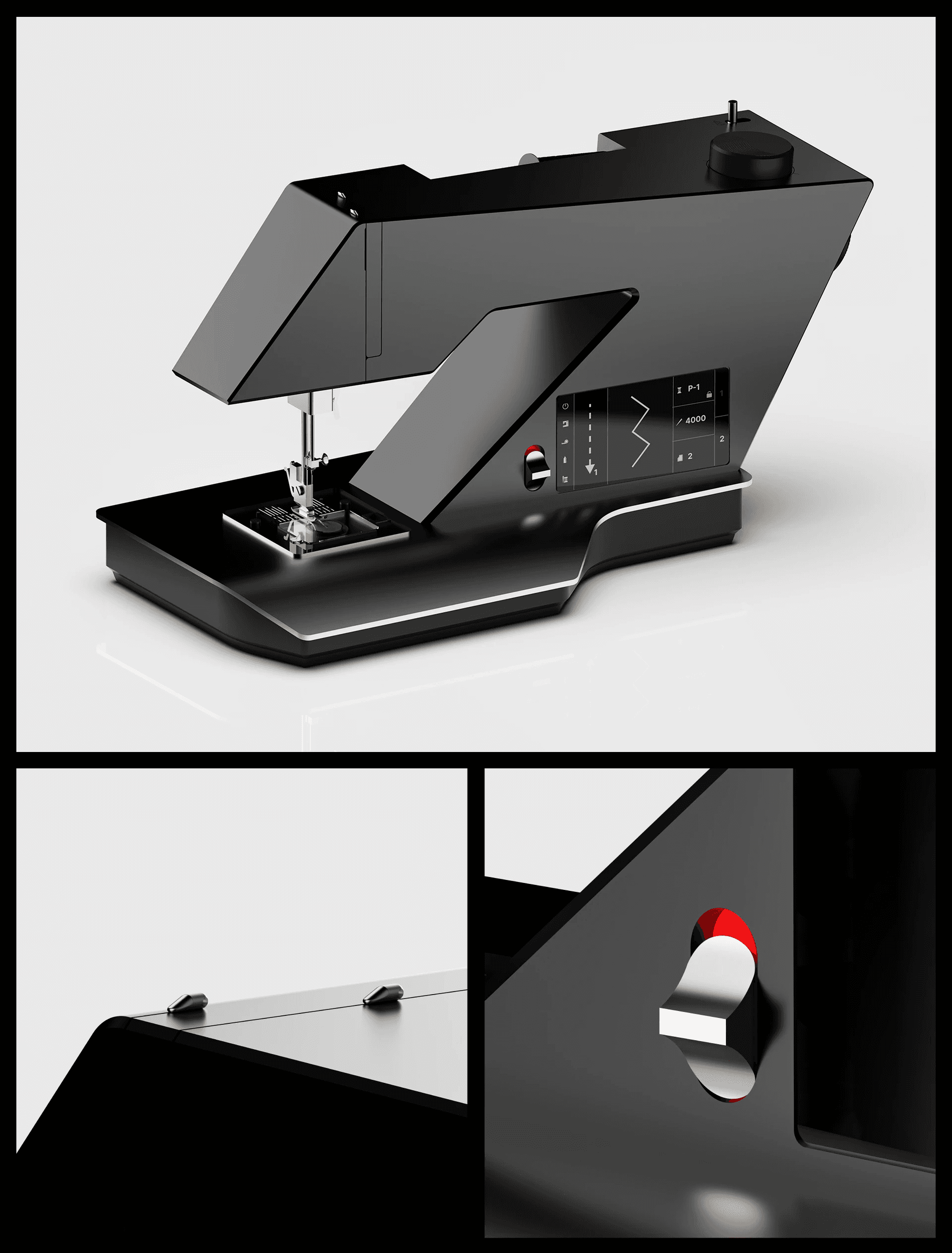
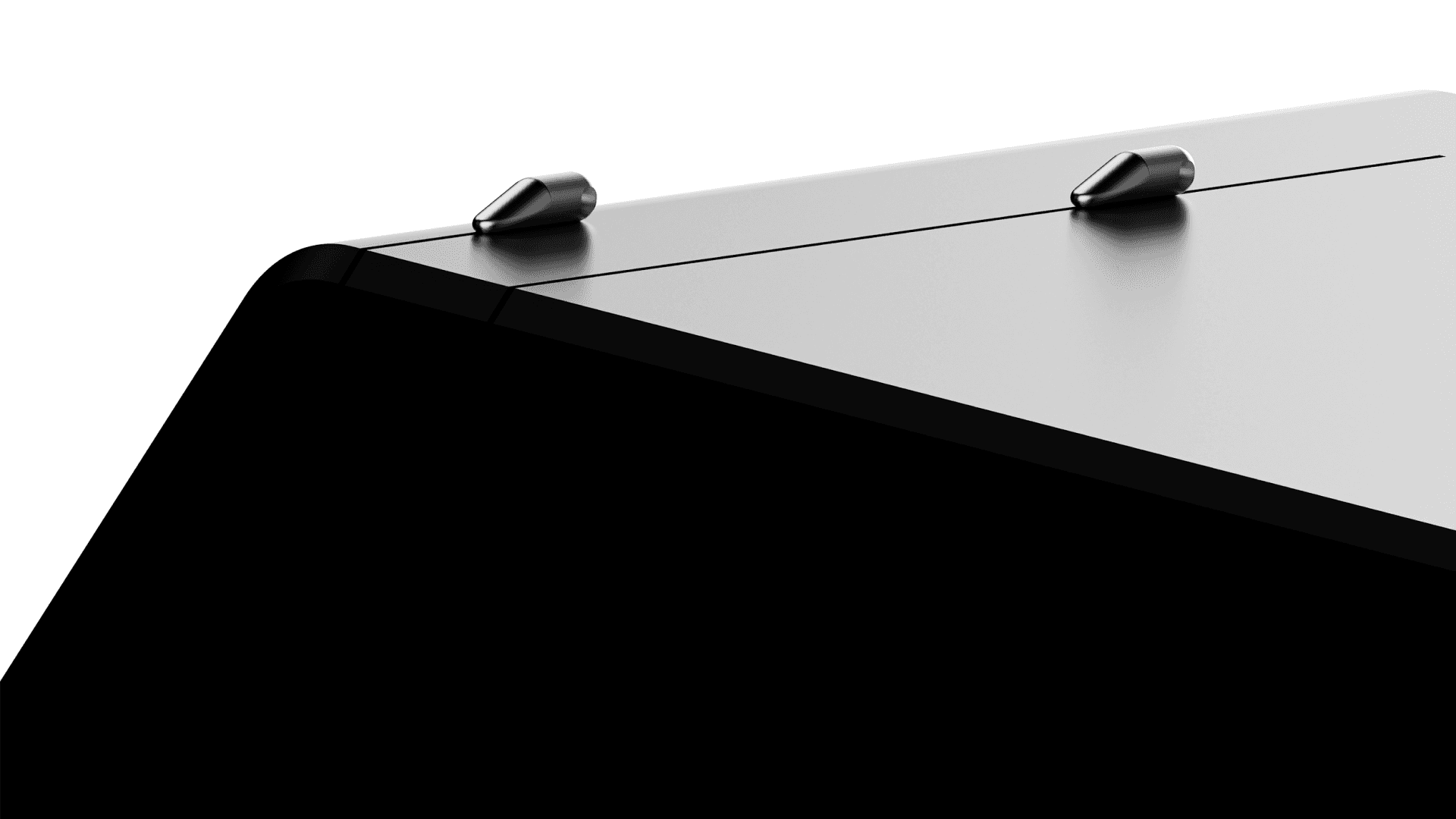
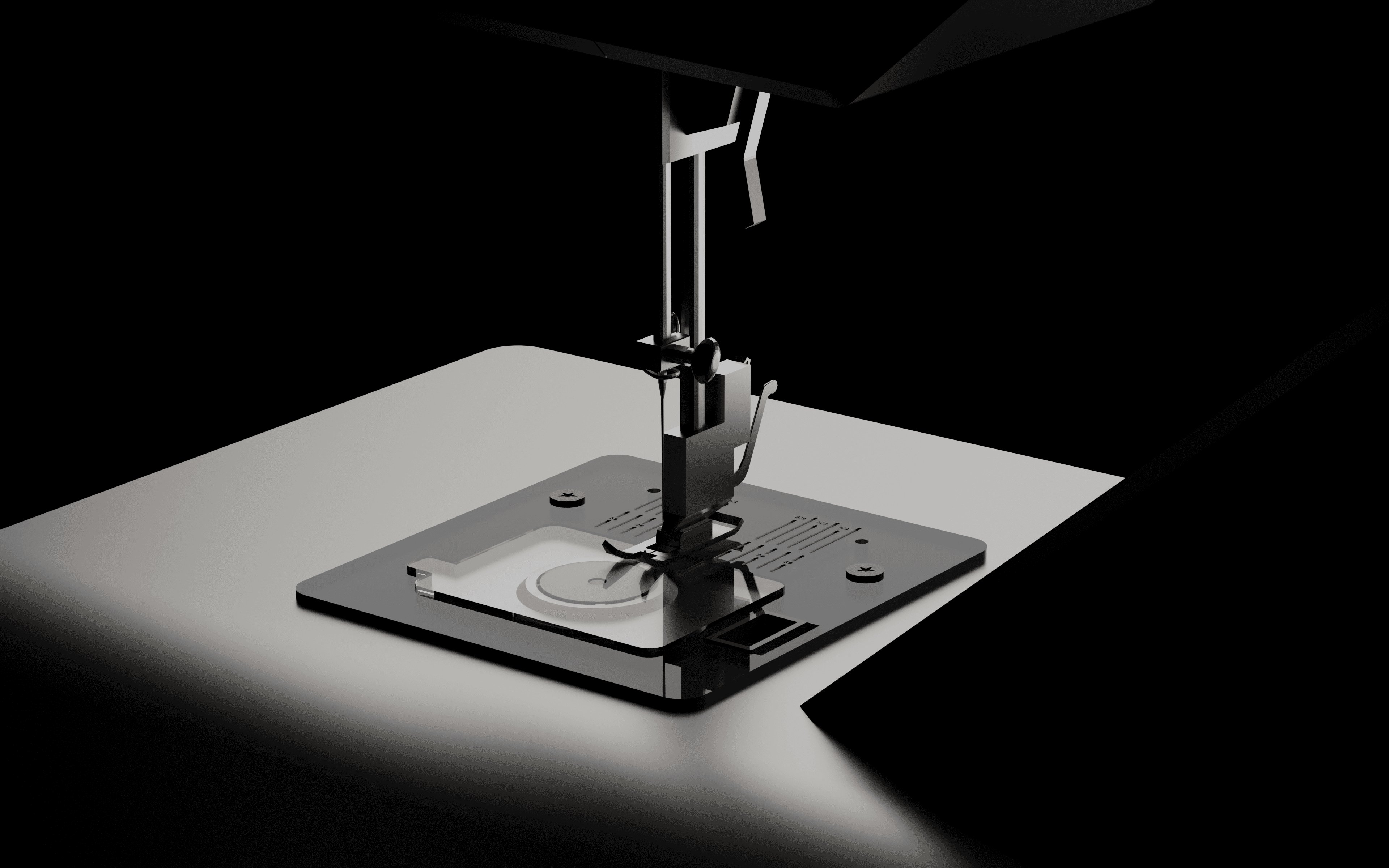
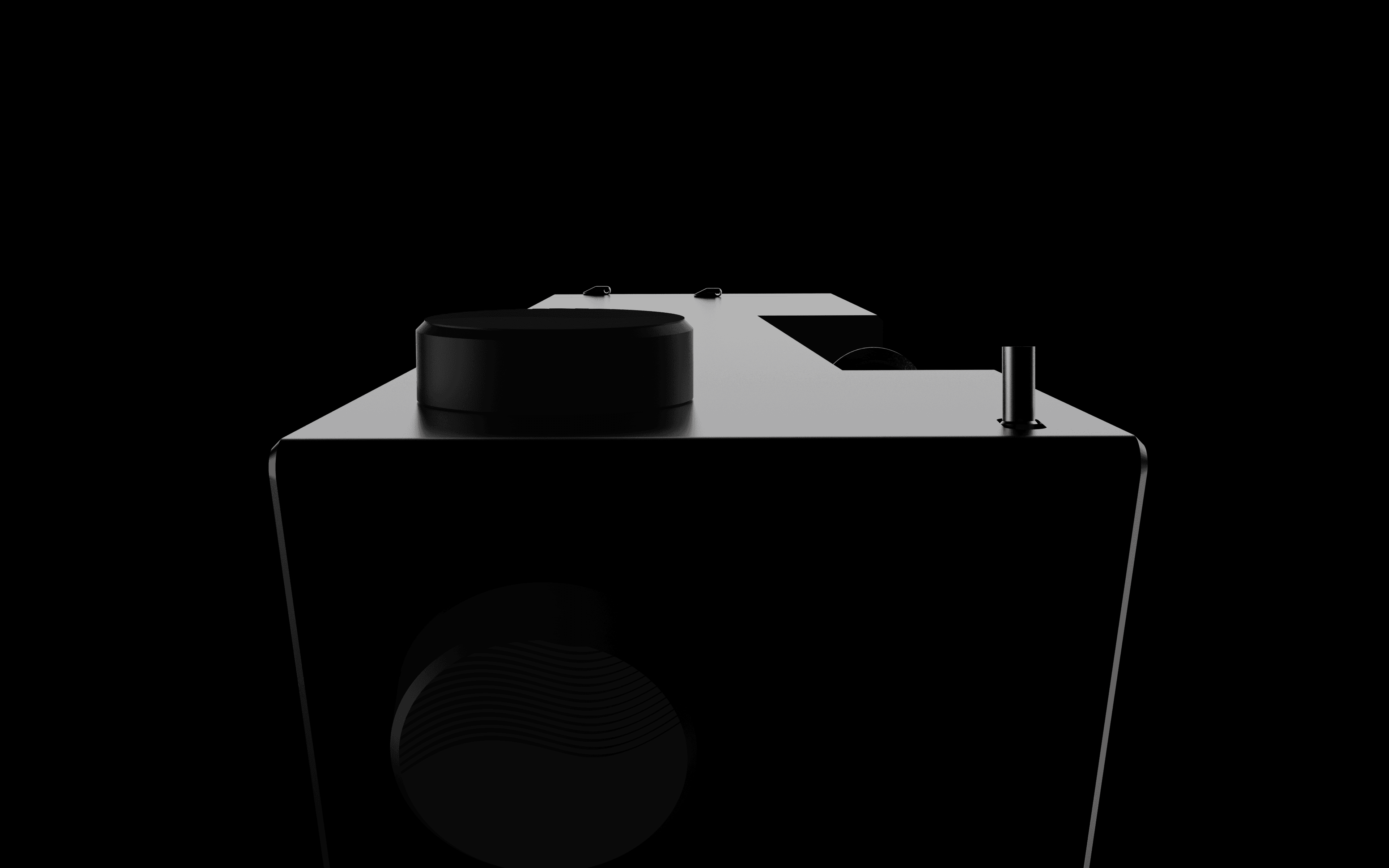
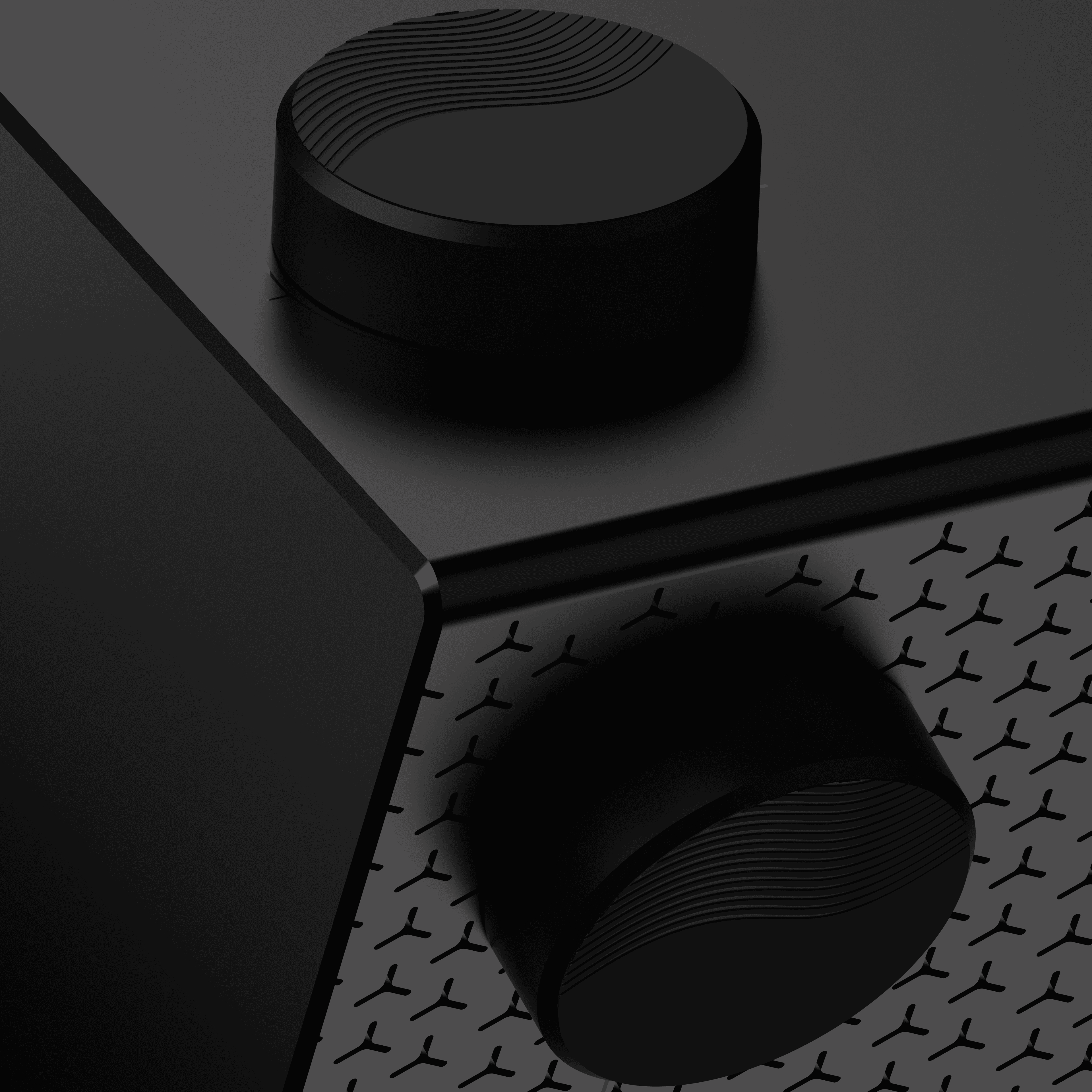
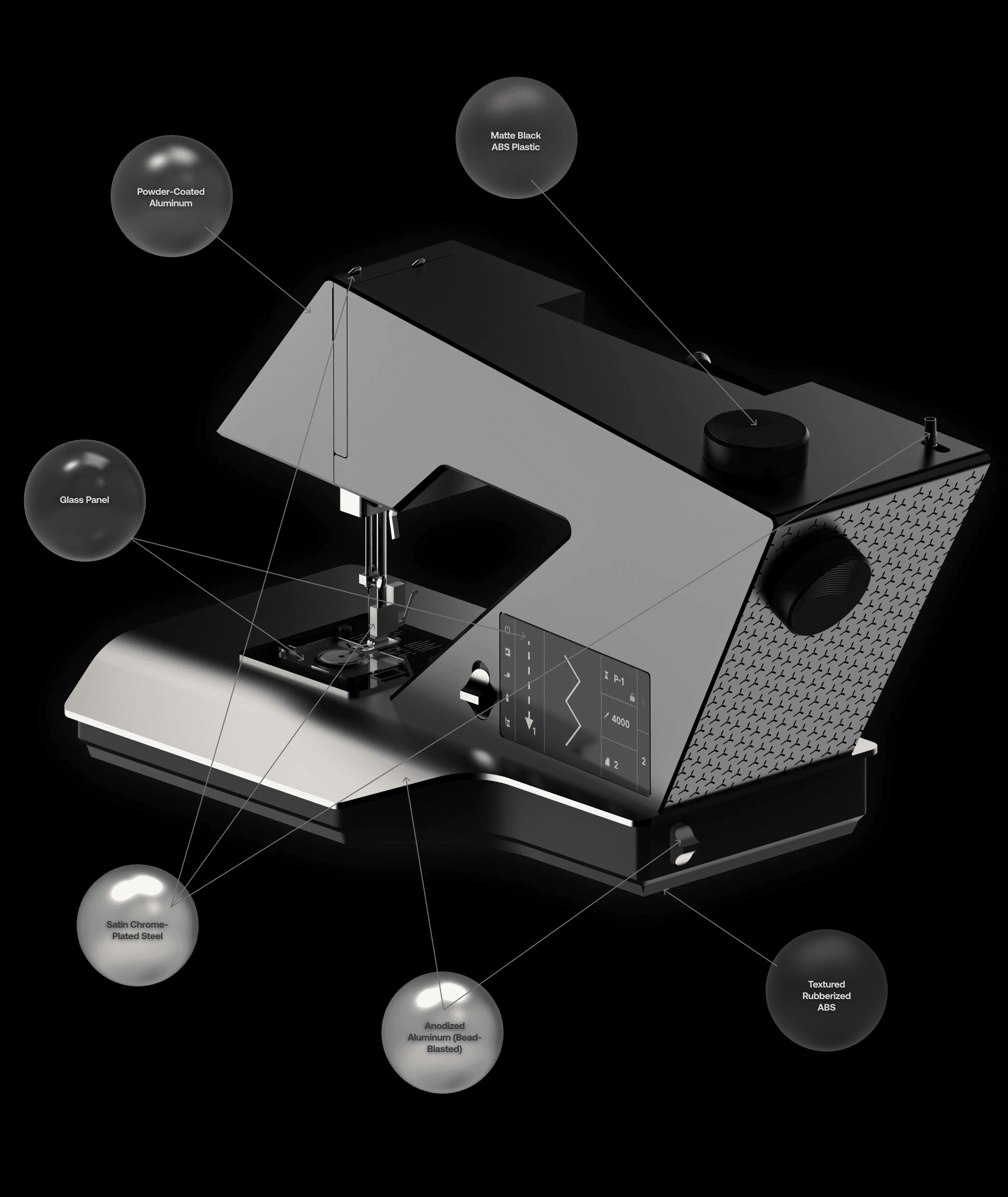
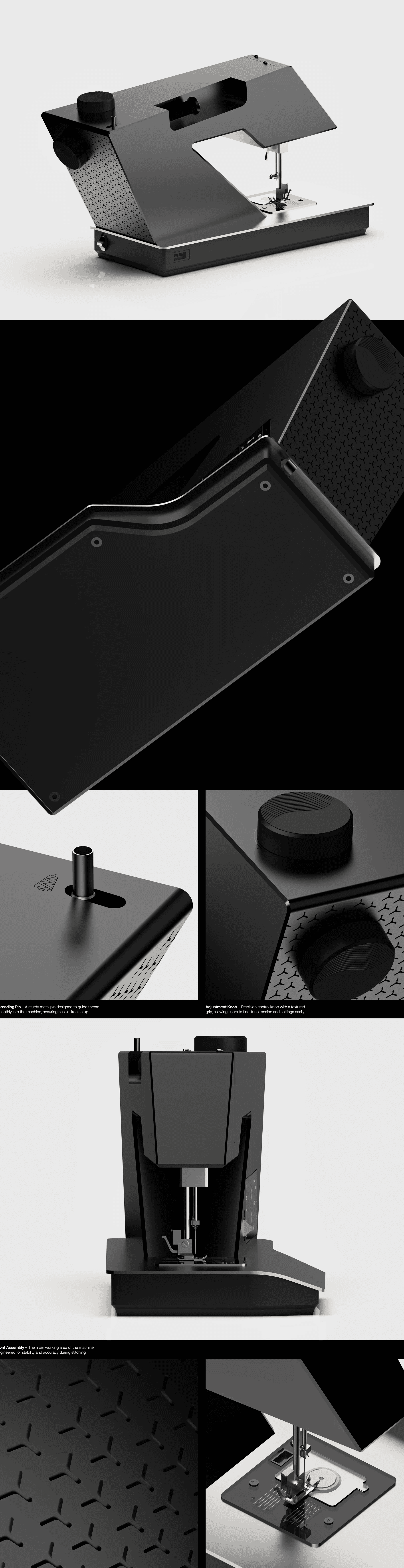
Threadline features a sculptural Z-frame structure that supports the machine while visually lightening its presence. The matte-black body gives it a contemporary, professional feel without relying on decorative elements.
Controls are visually simplified and logically placed to reduce cognitive load. The overall form communicates stability and precision while avoiding the bulk typically associated with sewing machines.
The design allows the machine to feel equally at home in a studio, bedroom, or shared living space. It is designed to be seen, not hidden.
Design Decisions
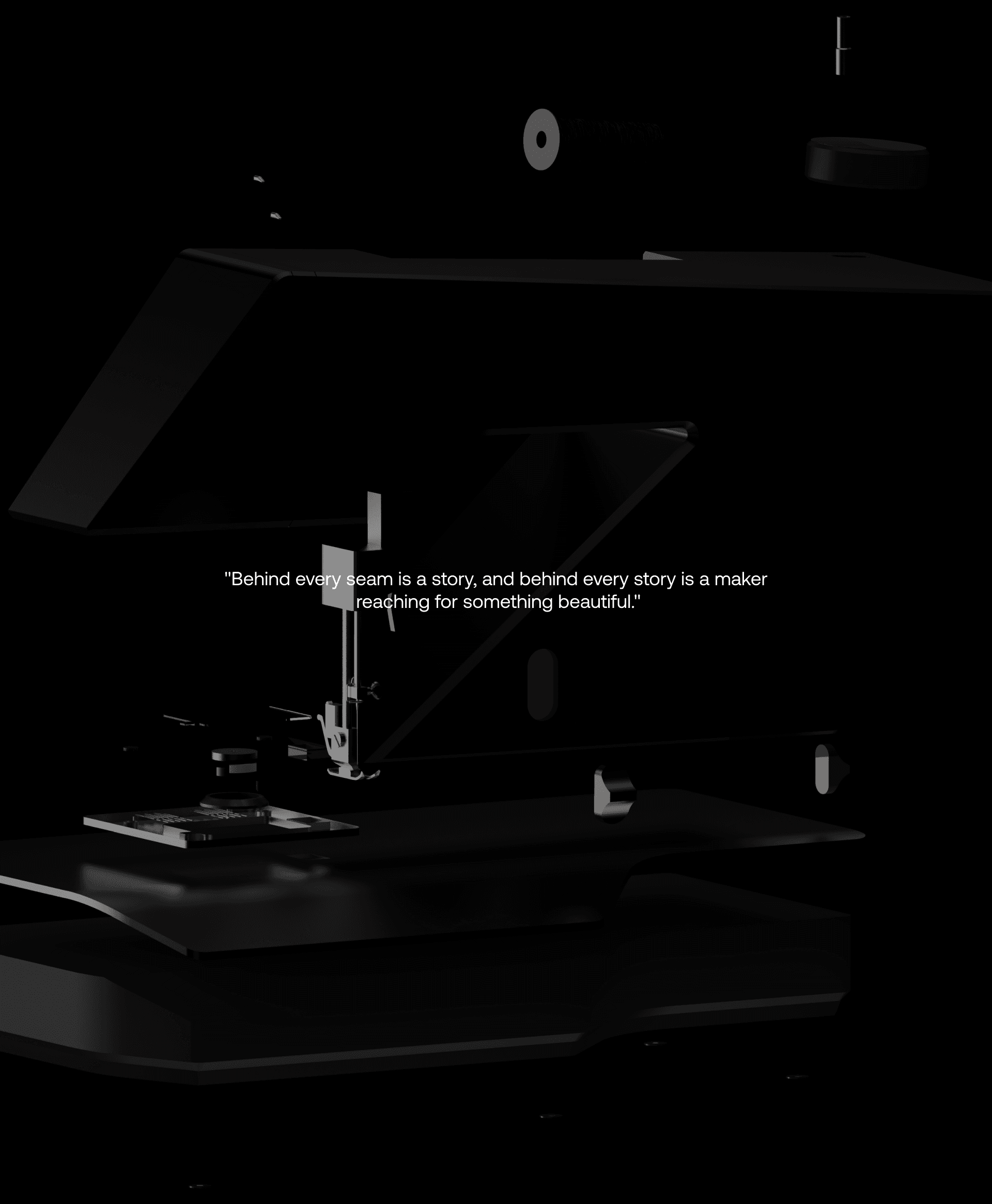
Z-frame silhouette
Creates a strong identity while reducing visual mass and improving balance.Minimal control language
Avoids overcrowded buttons and diagrams to reduce intimidation for beginners.Compact proportions
Designed for smaller living spaces and easier portability.Modern material finish
Matte surfaces reinforce a contemporary, professional aesthetic.
Each decision balances usability with visual restraint.
1.Z-frame
Creates a strong identity while reducing visual mass and improving balance.
2.Minimal control
Avoids overcrowded buttons and diagrams to reduce intimidation
3.Compact proportions
Designed for smaller living spaces and easier portability.
Key Insights
Many younger users are interested in sewing, but the tools make them hesitate before they even begin. The intimidation starts visually. Dense controls, diagrams, and labels create anxiety before the machine is ever turned on. Confidence drops before learning can start.
Sewing machines demand understanding before use. Instead of inviting exploration, they expect users to study the machine first. This reverses the natural learning process, especially for beginners who want to start by doing, not decoding.
Visual complexity is mistaken for capability. Users often equate cluttered interfaces with difficulty rather than power. A simpler, more intentional form can feel more capable because it appears easier to approach.
Living spaces influence product adoption. Large, heavy machines are inconvenient for smaller homes and shared spaces. When a product feels difficult to move or store, it is used less, regardless of how capable it is.
For modern creators, tools are part of identity. Sewing machines that look outdated feel disconnected from how users see themselves as designers or makers. A product that looks modern is more likely to feel relevant and worth engaging with.
Sewing is returning as a creative practice, not just a utility task. The machines supporting it need to reflect inspiration, clarity, and intent rather than tradition alone.
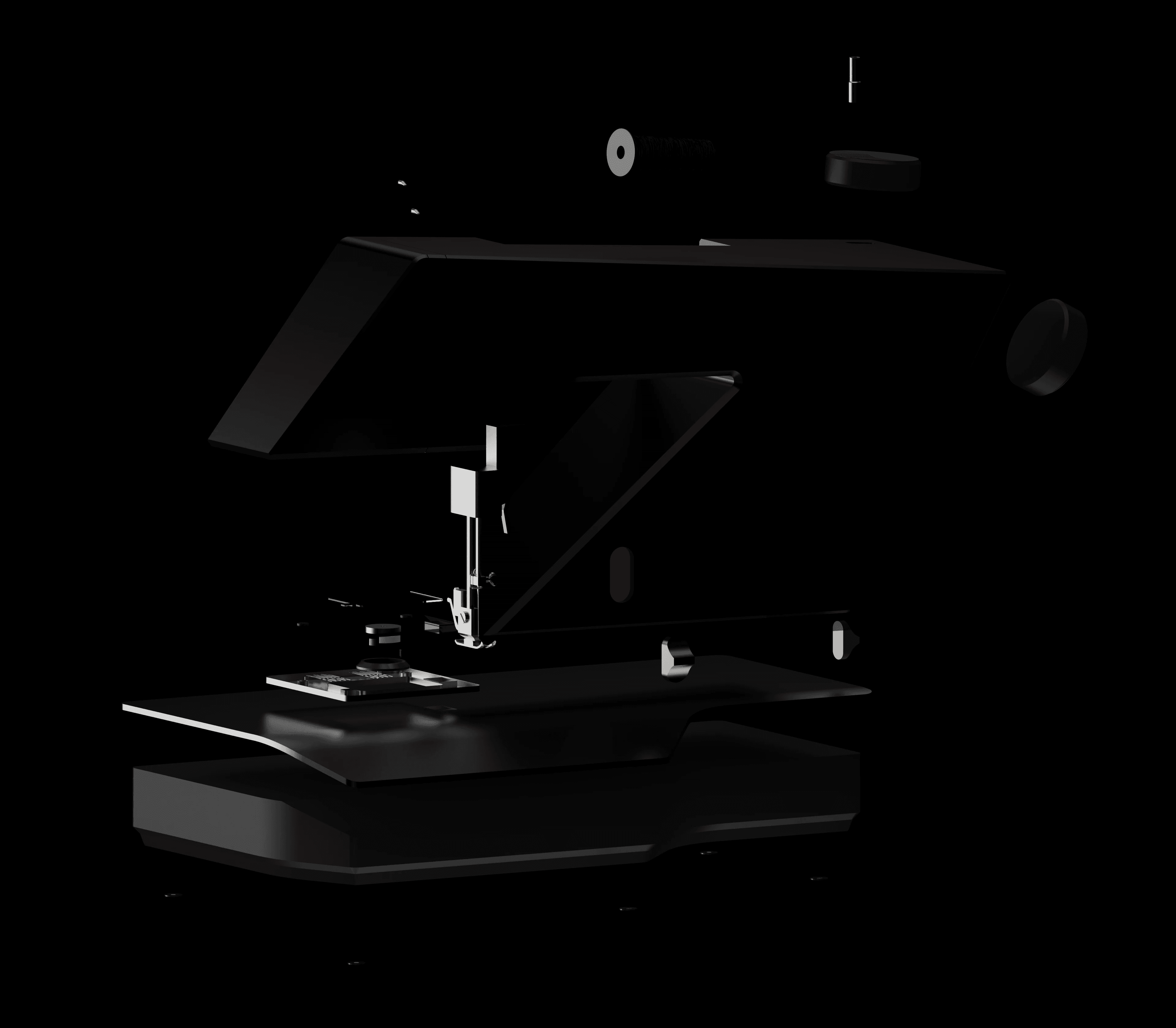
CAD
Renders
Threadline
Overview
Threadline is a reimagined sewing machine designed for a new generation of creators, designers, and DIY makers. Built around a sculptural Z-frame silhouette and a matte-black body, the project challenges the outdated visual and functional language of domestic sewing machines.
As sewing sees a resurgence among younger users driven by sustainability, customization, and maker culture, the tools supporting this craft have not evolved to meet them. Threadline explores how a sewing machine can feel modern, intuitive, and inspiring while remaining functional and grounded in real use.
This project focuses on form, ergonomics, clarity, and emotional appeal through an industrial design lens.
Categories
Consumer Electronics
Sewing Machine
Methods used
roduct Research • Competitive Benchmarking • CMF Exploration • Form Development • CAD Modeling • Visual Prototyping
Date
Problem Statement
While sewing machines have advanced technically, their design language has remained largely unchanged.
Most machines on the market today:
Appear bulky and visually dated
Rely on overcrowded buttons and printed stitch diagrams
Have steep learning curves for beginners
Are heavy and difficult to store in smaller modern homes
Treat sewing as a utility task rather than a creative practice
For Gen Z and Millennial users, aesthetics and usability are as important as functionality. The category has failed to reflect that shift, creating a clear opportunity for a modern, approachable, and design-forward sewing machine.
Solution at a Glance
Threadline simplifies sewing by rethinking the machine as a creative tool first, not an appliance.
It introduces a clean structural form, reduced visual complexity, and an intuitive physical layout that lowers the barrier to entry for beginners while remaining capable for experienced users. The design prioritizes clarity, portability, and presence, making the machine something users want to interact with and display.
How It Started
The project began with observing how sewing machines are perceived today.
Despite renewed interest in sewing among younger users, most machines still feel intimidating and outdated. They are often hidden away, brought out only when necessary, and rarely treated as objects of pride.
Early sketching focused on one question:
What would a sewing machine look like if it were designed today, for today’s creators?
Instead of starting with buttons or features, I began with silhouette, posture, and presence. The Z-frame emerged as a way to give the machine a strong identity while reducing visual mass and improving balance.
User Research
The research for Threadline started with noticing a contradiction.
Sewing is clearly making a comeback. Social platforms are filled with creators upcycling clothes, designing their own garments, and learning to sew from scratch. Sustainability, personalization, and slow making are driving real interest among younger users. Yet the tools meant to support this resurgence feel frozen in time.
I began by speaking with students, hobbyists, and first-time sewers who were curious about learning but hesitant to start. Many owned sewing machines that sat unused. Others had considered buying one but backed out after seeing how complex they looked.
A recurring comment kept coming up:
“It looks like I need to learn the machine before I can learn to sew.”
I spent time observing how people interacted with existing machines. Before even turning them on, users would pause. They scanned the surface, tried to understand the diagrams, and hesitated. Buttons, dials, and stitch charts competed for attention, creating anxiety before the first stitch was made.
For beginners, the problem was not capability. It was confidence.
Another pattern became clear when discussing living spaces. Most younger users live in smaller homes or shared apartments. Large, heavy machines felt inconvenient and out of place. They were often stored away, which created friction even before use. If setting up feels like a task, creative momentum is lost.
More experienced users shared a different frustration. While they understood the controls, they felt disconnected from the machines visually. The products did not reflect their identity as designers or makers. Sewing machines felt like appliances, not creative tools.
This research highlighted a clear gap. Sewing as a craft had evolved, but sewing machines had not. The category was still designed for utility and tradition, not for modern creative lifestyles.
Threadline emerged as a response to that gap. Not by adding more features, but by rethinking how a sewing machine should look, feel, and invite someone in.
Approach
The approach was to remove intimidation through form and clarity.
Instead of hiding complexity behind more controls, the design reduces visible elements and lets the structure communicate purpose. The machine is designed to feel confident and understandable at first glance.
I treated the sewing machine as an object that lives in a space, not just a tool used occasionally. This meant focusing on proportions, balance, and how the product feels when placed on a desk, carried, or stored.
Every design decision was evaluated against one question:
Does this make sewing feel more approachable?
Solution
Threadline features a sculptural Z-frame structure that supports the machine while visually lightening its presence. The matte-black body gives it a contemporary, professional feel without relying on decorative elements.
Controls are visually simplified and logically placed to reduce cognitive load. The overall form communicates stability and precision while avoiding the bulk typically associated with sewing machines.
The design allows the machine to feel equally at home in a studio, bedroom, or shared living space. It is designed to be seen, not hidden.
Design Decisions
Z-frame silhouette
Creates a strong identity while reducing visual mass and improving balance.Minimal control language
Avoids overcrowded buttons and diagrams to reduce intimidation for beginners.Compact proportions
Designed for smaller living spaces and easier portability.Modern material finish
Matte surfaces reinforce a contemporary, professional aesthetic.
Each decision balances usability with visual restraint.
1.Z-frame
Creates a strong identity while reducing visual mass and improving balance.
2.Minimal control
Avoids overcrowded buttons and diagrams to reduce intimidation
3.Compact proportions
Designed for smaller living spaces and easier portability.
Key Insights
Many younger users are interested in sewing, but the tools make them hesitate before they even begin. The intimidation starts visually. Dense controls, diagrams, and labels create anxiety before the machine is ever turned on. Confidence drops before learning can start.
Sewing machines demand understanding before use. Instead of inviting exploration, they expect users to study the machine first. This reverses the natural learning process, especially for beginners who want to start by doing, not decoding.
Visual complexity is mistaken for capability. Users often equate cluttered interfaces with difficulty rather than power. A simpler, more intentional form can feel more capable because it appears easier to approach.
Living spaces influence product adoption. Large, heavy machines are inconvenient for smaller homes and shared spaces. When a product feels difficult to move or store, it is used less, regardless of how capable it is.
For modern creators, tools are part of identity. Sewing machines that look outdated feel disconnected from how users see themselves as designers or makers. A product that looks modern is more likely to feel relevant and worth engaging with.
Sewing is returning as a creative practice, not just a utility task. The machines supporting it need to reflect inspiration, clarity, and intent rather than tradition alone.
CAD
Renders
Threadline
Overview
Threadline is a reimagined sewing machine designed for a new generation of creators, designers, and DIY makers. Built around a sculptural Z-frame silhouette and a matte-black body, the project challenges the outdated visual and functional language of domestic sewing machines.
As sewing sees a resurgence among younger users driven by sustainability, customization, and maker culture, the tools supporting this craft have not evolved to meet them. Threadline explores how a sewing machine can feel modern, intuitive, and inspiring while remaining functional and grounded in real use.
This project focuses on form, ergonomics, clarity, and emotional appeal through an industrial design lens.
Categories
Consumer Electronics
Sewing Machine
Methods used
roduct Research • Competitive Benchmarking • CMF Exploration • Form Development • CAD Modeling • Visual Prototyping
Date
Problem Statement
While sewing machines have advanced technically, their design language has remained largely unchanged.
Most machines on the market today:
Appear bulky and visually dated
Rely on overcrowded buttons and printed stitch diagrams
Have steep learning curves for beginners
Are heavy and difficult to store in smaller modern homes
Treat sewing as a utility task rather than a creative practice
For Gen Z and Millennial users, aesthetics and usability are as important as functionality. The category has failed to reflect that shift, creating a clear opportunity for a modern, approachable, and design-forward sewing machine.
Solution at a Glance
Threadline simplifies sewing by rethinking the machine as a creative tool first, not an appliance.
It introduces a clean structural form, reduced visual complexity, and an intuitive physical layout that lowers the barrier to entry for beginners while remaining capable for experienced users. The design prioritizes clarity, portability, and presence, making the machine something users want to interact with and display.
How It Started
The project began with observing how sewing machines are perceived today.
Despite renewed interest in sewing among younger users, most machines still feel intimidating and outdated. They are often hidden away, brought out only when necessary, and rarely treated as objects of pride.
Early sketching focused on one question:
What would a sewing machine look like if it were designed today, for today’s creators?
Instead of starting with buttons or features, I began with silhouette, posture, and presence. The Z-frame emerged as a way to give the machine a strong identity while reducing visual mass and improving balance.
User Research
The research for Threadline started with noticing a contradiction.
Sewing is clearly making a comeback. Social platforms are filled with creators upcycling clothes, designing their own garments, and learning to sew from scratch. Sustainability, personalization, and slow making are driving real interest among younger users. Yet the tools meant to support this resurgence feel frozen in time.
I began by speaking with students, hobbyists, and first-time sewers who were curious about learning but hesitant to start. Many owned sewing machines that sat unused. Others had considered buying one but backed out after seeing how complex they looked.
A recurring comment kept coming up:
“It looks like I need to learn the machine before I can learn to sew.”
I spent time observing how people interacted with existing machines. Before even turning them on, users would pause. They scanned the surface, tried to understand the diagrams, and hesitated. Buttons, dials, and stitch charts competed for attention, creating anxiety before the first stitch was made.
For beginners, the problem was not capability. It was confidence.
Another pattern became clear when discussing living spaces. Most younger users live in smaller homes or shared apartments. Large, heavy machines felt inconvenient and out of place. They were often stored away, which created friction even before use. If setting up feels like a task, creative momentum is lost.
More experienced users shared a different frustration. While they understood the controls, they felt disconnected from the machines visually. The products did not reflect their identity as designers or makers. Sewing machines felt like appliances, not creative tools.
This research highlighted a clear gap. Sewing as a craft had evolved, but sewing machines had not. The category was still designed for utility and tradition, not for modern creative lifestyles.
Threadline emerged as a response to that gap. Not by adding more features, but by rethinking how a sewing machine should look, feel, and invite someone in.
Approach
The approach was to remove intimidation through form and clarity.
Instead of hiding complexity behind more controls, the design reduces visible elements and lets the structure communicate purpose. The machine is designed to feel confident and understandable at first glance.
I treated the sewing machine as an object that lives in a space, not just a tool used occasionally. This meant focusing on proportions, balance, and how the product feels when placed on a desk, carried, or stored.
Every design decision was evaluated against one question:
Does this make sewing feel more approachable?
Solution
Threadline features a sculptural Z-frame structure that supports the machine while visually lightening its presence. The matte-black body gives it a contemporary, professional feel without relying on decorative elements.
Controls are visually simplified and logically placed to reduce cognitive load. The overall form communicates stability and precision while avoiding the bulk typically associated with sewing machines.
The design allows the machine to feel equally at home in a studio, bedroom, or shared living space. It is designed to be seen, not hidden.
Design Decisions
Z-frame silhouette
Creates a strong identity while reducing visual mass and improving balance.Minimal control language
Avoids overcrowded buttons and diagrams to reduce intimidation for beginners.Compact proportions
Designed for smaller living spaces and easier portability.Modern material finish
Matte surfaces reinforce a contemporary, professional aesthetic.
Each decision balances usability with visual restraint.
1.Z-frame
Creates a strong identity while reducing visual mass and improving balance.
2.Minimal control
Avoids overcrowded buttons and diagrams to reduce intimidation
3.Compact proportions
Designed for smaller living spaces and easier portability.
Key Insights
Many younger users are interested in sewing, but the tools make them hesitate before they even begin. The intimidation starts visually. Dense controls, diagrams, and labels create anxiety before the machine is ever turned on. Confidence drops before learning can start.
Sewing machines demand understanding before use. Instead of inviting exploration, they expect users to study the machine first. This reverses the natural learning process, especially for beginners who want to start by doing, not decoding.
Visual complexity is mistaken for capability. Users often equate cluttered interfaces with difficulty rather than power. A simpler, more intentional form can feel more capable because it appears easier to approach.
Living spaces influence product adoption. Large, heavy machines are inconvenient for smaller homes and shared spaces. When a product feels difficult to move or store, it is used less, regardless of how capable it is.
For modern creators, tools are part of identity. Sewing machines that look outdated feel disconnected from how users see themselves as designers or makers. A product that looks modern is more likely to feel relevant and worth engaging with.
Sewing is returning as a creative practice, not just a utility task. The machines supporting it need to reflect inspiration, clarity, and intent rather than tradition alone.
CAD
Renders